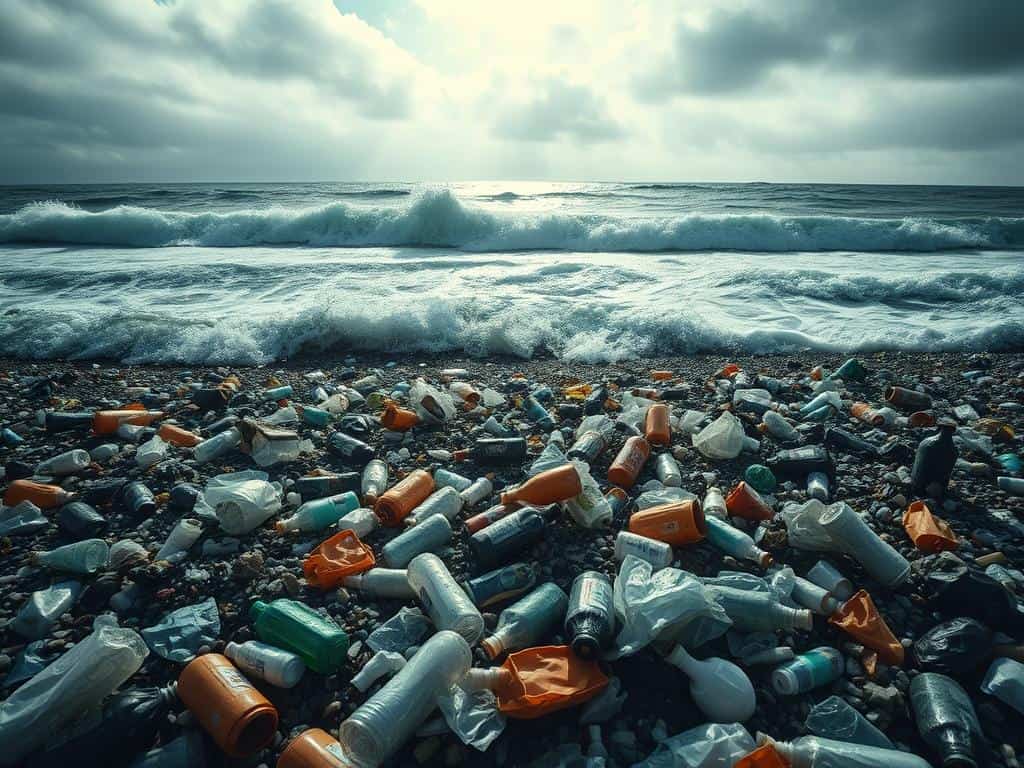
Standing on the sandy shores of my favorite beach, I watched waves hit the sand. Unaware of the hidden crisis under the sea. Just a short walk by the water’s edge showed small plastic bits scattered across the sand.
These are signs of a bigger problem in our oceans. With 75% of our planet covered by oceans, I wonder how many understand marine pollution’s vastness. Did you know about 8 million metric tons of plastic waste go into the oceans every year?
This huge amount is like dumping a truckload of plastic into the sea every minute. It’s an environmental crisis harming marine life and our health. Reflecting on these facts, it’s clear that our actions have a massive impact. We must pay attention and act now.
Key Takeaways
- Oceans are critical ecosystems, covering 75% of Earth’s surface.
- Approximately 8 million metric tons of plastic waste enter oceans annually.
- Human activities significantly contribute to marine pollution.
- Marine life is at risk due to increasing plastic waste.
- Understanding ocean pollution is essential to spark change.
Understanding Marine Pollution and
The Definition of Marine Pollution
When we talk about marine pollution, we’re talking about harmful stuff getting into the ocean. This stuff, like toxic chemicals, harms sea life and even our health.
How Pollution Gets Into the Ocean
It’s critical to know how pollution reaches our oceans to fight it. About 80% of it comes from stuff we do on land. Things like dumping waste directly into water, runoff from farms, and industrial accidents contribute to this problem.
Another surprising source is our laundry. Washing our clothes releases tiny synthetic fibers into waterways. This shows why we need to be careful with our waste. It’s key in protecting our oceans from pollution.
Ocean Pollution Facts That Will Shock You
The problem of ocean pollution is scary, especially when it comes to plastic waste. We
We now have between 75 to 199 million tons of plastic in our oceans. This plastic threatens the health of ocean and harms a lot of marine life.
Startling Statistics on Plastic Waste
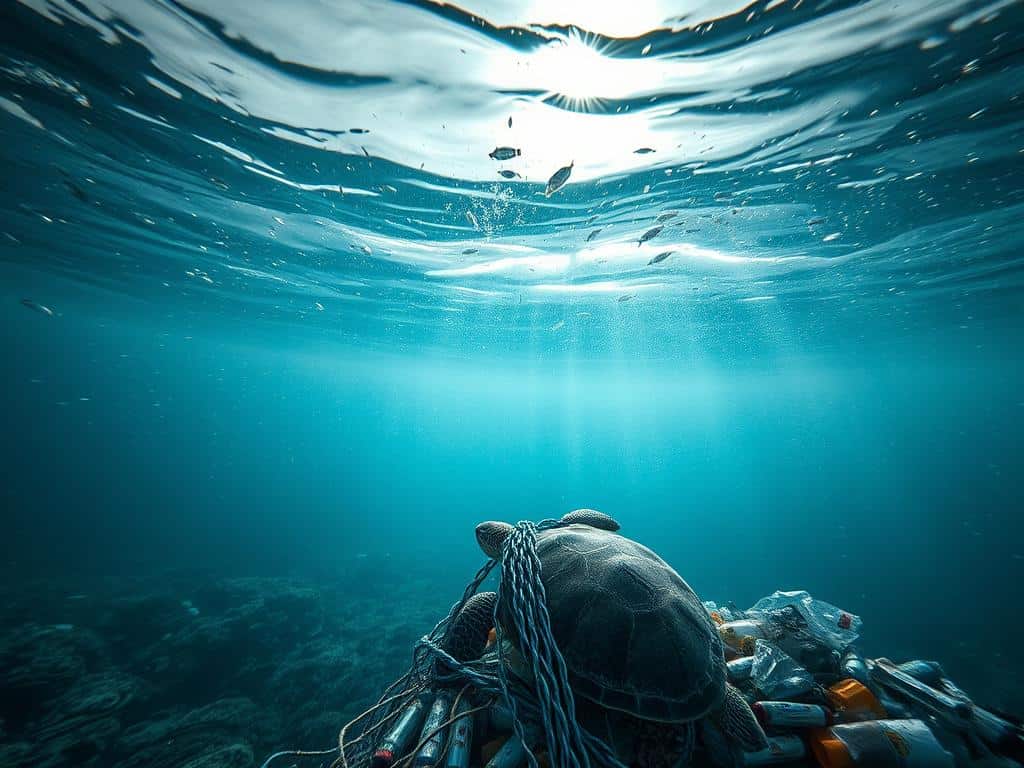
Every year, more than 1 million marine animals die because of plastic pollution. This includes big and small sea creatures.hey die after eating plastic or getting caught in old fishing gear. These sad events show we must act now to save our oceans.
mpact on Marine Life
But it’s not just big sea animals and birds that suffer because of plastic pollution.It affects everything alive in the sea, even tiny plankton. When plankton eat microplastics, it’s bad news for the whole marine world. Thinking about this makes me realize how our choices affect the ocean’s health and all its creatures.
The Depth of the Ocean Pollution Crisis
Ocean pollution hides beneath the waves, unseen but present. It’s shocking to realize the ocean floor is drowning in about 14 million metric tons of waste. This trash harms marine ecosystems and complicates cleanup work.
Invisibility of Underwater Pollution
Most underwater pollution ends up on the sea floor, hidden from view. Microplastics, which are small particles, are a big part of this problem. They enter marine animals, affecting their health and ours, as they make their way into our food.
The Great Pacific Garbage Patch
The Great Pacific Garbage Patch is a massive area of ocean pollution. It’s twice the size of Texas, holding 1.8 trillion pieces of plastic. This huge amount of trash harms the ocean and all living things in it, showing we need to act.
Conclusion
This exploration of ocean pollution shows its effects on the sea, our health, and our planet’s future. The shocking stats about plastic waste hurting marine life drive home the need for urgent action. We must address the dire condition of our oceans.
Each person has a key role in fighting against ocean pollution. By joining beach clean-ups, pushing for green policies, and making companies manage their waste, we can make a big difference. It’s critical that we all work together to protect our oceans.
The scary figures about pollution don’t have to predict our future. I believe that if we unite to solve this problem, we can save marine life for future generations. Let’s work with nature, ensuring our efforts lead to cleaner oceans and healthier ecosystems.