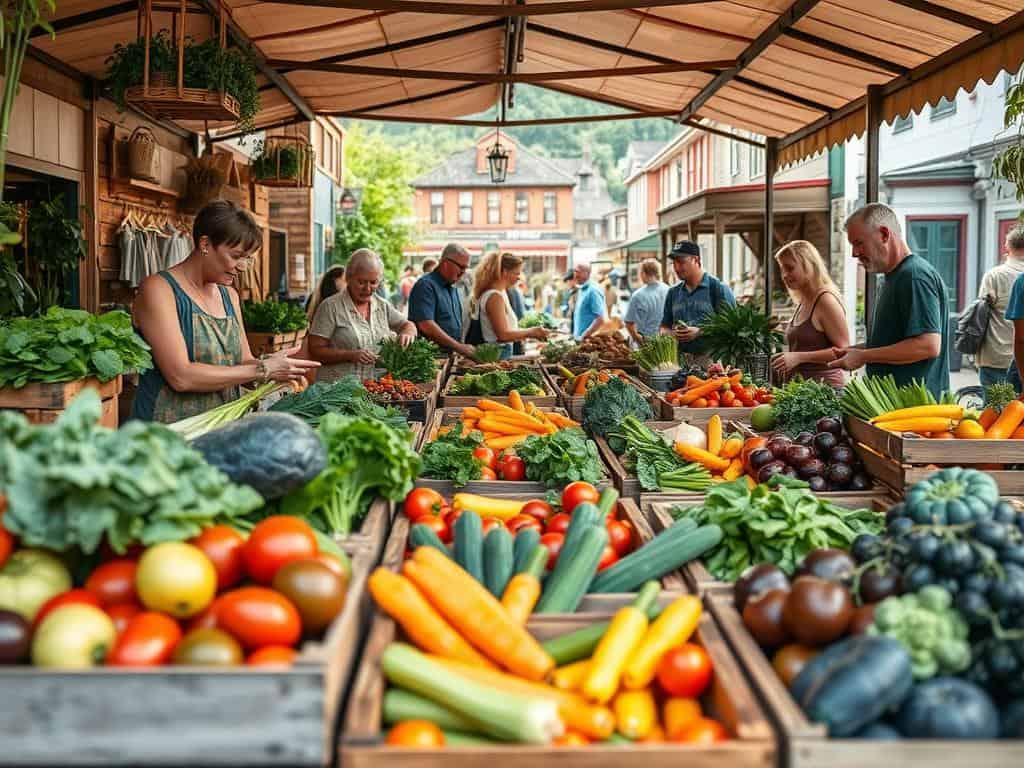
As I stood at my local farmer’s market, fresh produce’s vibrant colors caught my eye. It felt like more than just food; it was a connection to my community and the land. Every tomato, slightly imperfect, shared a story of a farm close by, making me value the local food movement more.
Sourcing food directly from these vendors supports them and cuts down on the carbon footprint from long transport. While picking seasonal favorites, I saw how my choice was part of a bigger picture. This choice supports eco nutrition and farm-to-table principles. This article explores the good that comes from eating locally for the planet and our communities.
Key Takeaways
- The local food movement focuses on sourcing produce from nearby farms.
- Eating local can significantly reduce your carbon footprint.
- Support for local economies strengthens community relationships.
- Sustainability is a core principle of the local food philosophy.
- Choosing local foods contributes to eco nutrition and healthier eating.
- Farm-to-table options enhance food freshness and flavor.
Understanding the Local Food Movement
The local food movement stresses eating food grown near us. This means buying veggies and fruits from local farmers. Doing this makes our meals fresher and tastier. It’s also good for our health and helps the community by supporting local farmers.
Definition and Scope
This movement is about getting our food from close by, usually within 100 to 400 miles. We’re talking farmers markets and food programs that support local growers. It aims to cut down on how far food travels. This makes our food fresher and helps our local economy too.
The Growth of the Movement
Lately, more people have joined the local food movement. They enjoy the benefits of fresh, local produce and support farming in their community. This shift is making our communities and the environment better. It also helps us feel more connected to where our food comes from.
Environmental Benefits of Eating Local
Eating local food helps the environment in many ways. It reduces the carbon footprint from transporting food and supports sustainable farming. By choosing local produce, I help create a better planet and a more responsible food industry.
Reduction of Carbon Footprint
Eating food from local sources cuts down on greenhouse gases. Transporting food from faraway places creates more carbon emissions. If we pick food from local farms, we can reduce our carbon emissions by about 4-5%. This shows how big of an impact buying local has on our planet.
Sustainable Farming Practices
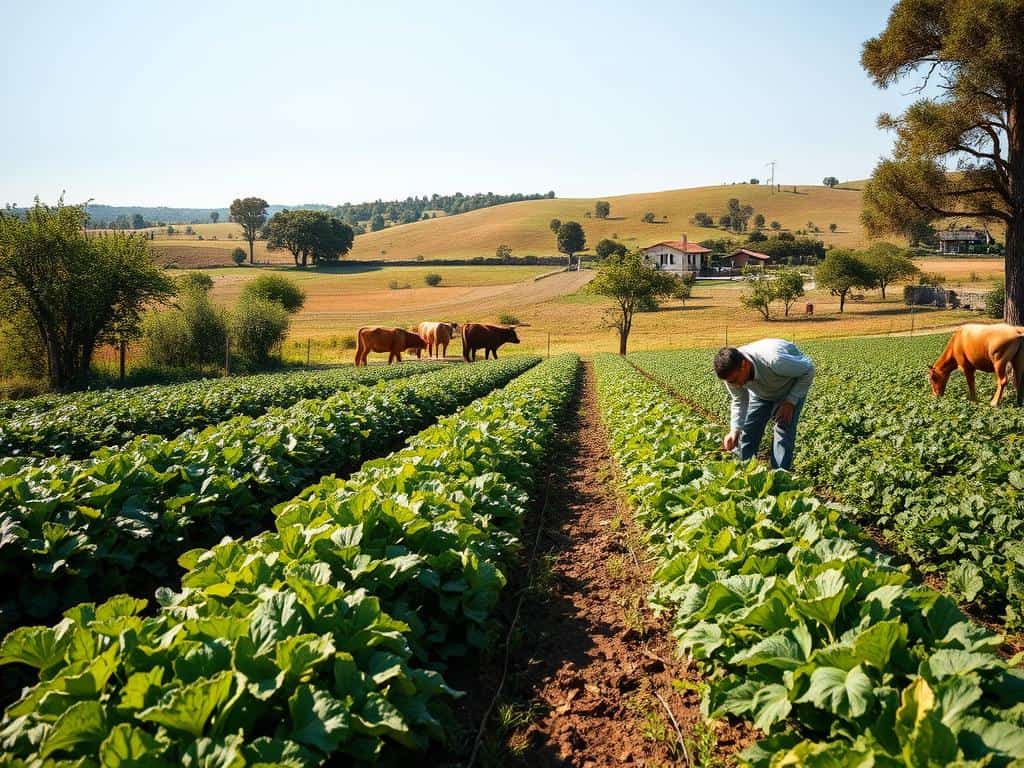
Choosing local produce also means I support eco-friendly farming. Local farmers often use better practices, like rotating crops and natural pesticides. These methods help keep the soil healthy and protect the environment. By buying from these farmers, I encourage ways of farming that care for our earth.
The Social and Economic Impact of Local Food
Eating locally boosts your health and helps the local economy and community bond. When I buy from local farmers, the effects reach beyond what I eat.
Strengthening Local Economies
Buying food from nearby farms helps local economies grow. Money spent on local food stays in the community. This keeps small businesses strong and creates more jobs.
Using local products helps our neighborhoods become financially healthier. This ensures they keep growing in a sustainable way.
Building Community Relationships
Buying local helps me connect with where my food comes from. It makes me feel closer to my neighbors and the environment. Talking with farmers helps me understand their work better, building trust.
This connection makes the local food system stronger. It also improves how we live together in the community.
Conclusion
Choosing local food is more than just a passing trend. It shows a deep dedication to eating in a way that helps our planet. By picking local produce, I help lessen my carbon footprint. I also back farming methods that are kind to the Earth.
The perks of local food go well beyond being handy. They help the environment, boost our health, and strengthen our community. When I go for local foods, I’m doing good for nature, myself, and my neighbors.
In my own life, I’ve seen how eating local foods helps me live greener. Getting to know the farmers and the journey of my food makes me value it more. This bond doesn’t just feed me better. It also pumps life into local economies, helping us all thrive together.
Making the shift to a diet focused on local foods can change the world. It makes our food supply more secure and gives us foods that are fresher and more nutritious than store-bought, packaged options. Every time I pick a local product, I’m helping my health, our planet, and our community all at once.