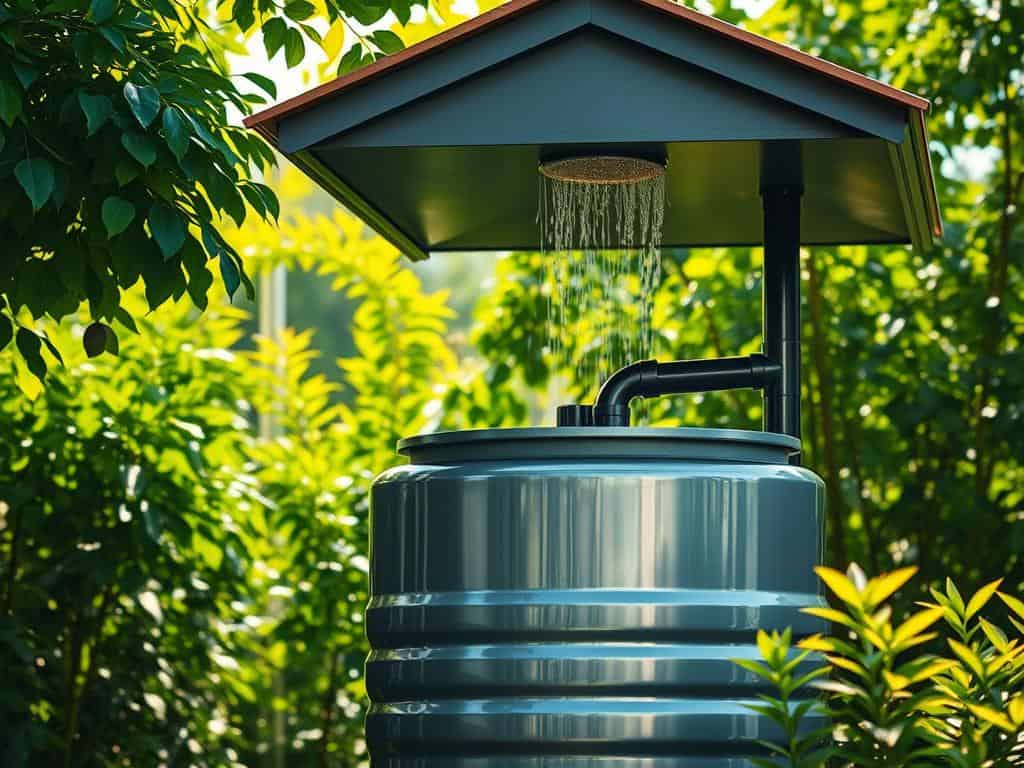
Living in a place where the weather is always a surprise, I got excited and worried when I saw dark clouds. The rain felt good at first, but then my garden needed water in dry months. That’s when I learned about rainwater harvesting. It changed how I took care of my garden and saved water.
By gathering rainwater, I didn’t stress in dry spells and helped my garden bloom. This method became more than a project for me. It was a new way to live, working with nature. Now, I want to show you how to harvest rainwater successfully.
Key Takeaways
- Rainwater harvesting saves water and helps gardens grow.
- You can design rainwater systems to fit any home.
- These systems meet your water needs in a green way.
- This eco-friendly method is good for our planet.
- It’s a versatile solution for both new and old homes.
Understanding Rainwater Harvesting Benefits
Rainwater harvesting offers big wins for both personal and planet health. It brings environmental perks, saves money, and boosts water quality. These benefits help us use water better and smarter. They’re perfect for homeowners who want to use resources wisely.
Environmental Impact
Rainwater systems are great for the environment. They stop rain from causing floods and ease the load on city water systems. They also help our local habitats by saving clean water. Using this water is good for gardens and saves important fresh water too.
Cost Savings
Collecting rainwater can help save money. The size of your system and local rain affect how much you save. You can figure out how much money you get back from your system. This makes it more attractive and shows that living green can save cash.
Water Quality
Quality of water from rain harvesting is top-notch. With the right cleaning, it can be used for many things, like watering plants or even drinking. This shows harvested rain is key for good water use at home. It keeps water management effective and healthy.
Effective Techniques for Rainwater Harvesting
To harvest rainwater well, you need to use various methods. These can be simple, like basic rain barrel setups. Or they can be more complex, helping to hold more water. It’s also key to know how to distribute the water once you have it.
Basic Collection Systems
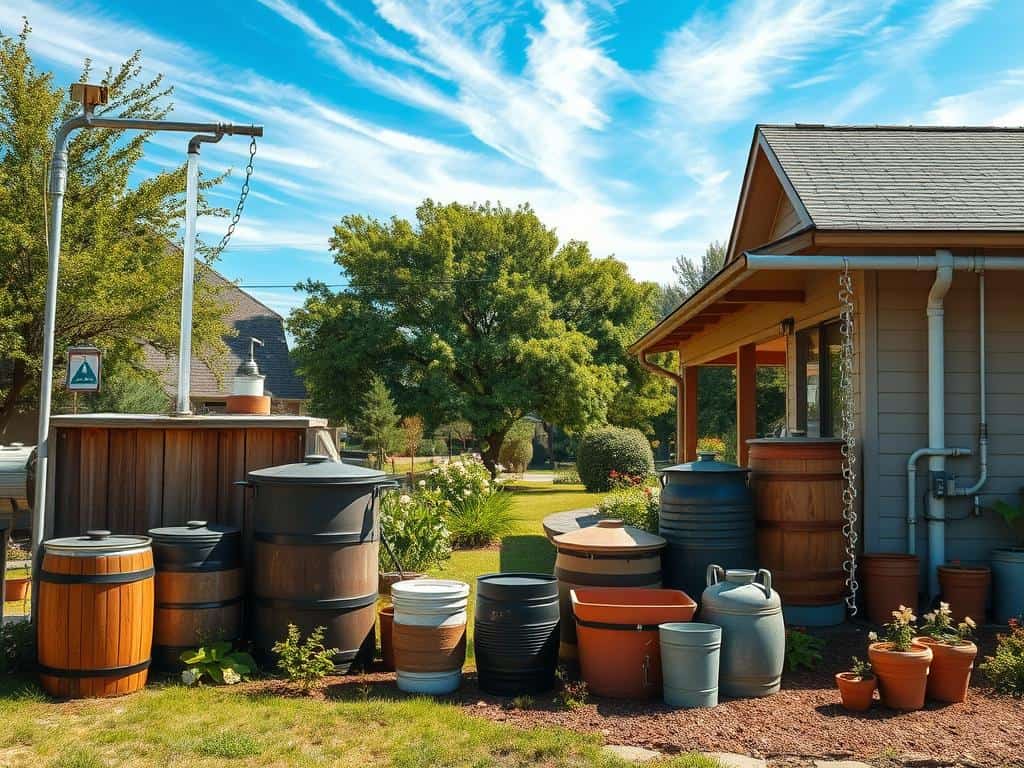
Starting with rainwater collection is easy with rain barrels. You can even use recycled materials to keep costs down. They might not hold a lot of water. But they are great for beginners to learn with. This basic setup lets anyone get used to collecting rainwater.
Advanced Storage Solutions
Learning more about rainwater collecting leads to trying bigger storage options. Larger cisterns are exciting because they can hold a lot more water from your roof’s downspouts. They fit underground, which saves space and looks good. Using these, I can have water even in dry times.
Methods of Water Distribution
Different ways exist to spread the water around once you’ve collected it. You might use a simple system that uses gravity. Or a more technical one that needs pumps to move water with pressure. This lets me use water wisely in my garden. It helps make rainwater a key part of living sustainably.
Conclusion
Rainwater harvesting is a key to being eco-friendly and saving water. It lets me use free water, cutting down my impact on the planet. It also makes my garden thrive. I’ve seen big benefits like being more self-reliant and helping the environment.
This method is crucial for anyone wanting a well-run home. By using smart strategies, living sustainably becomes easy and rewarding. The journey to master rainwater harvesting starts now. I urge others to try it and see the awesome benefits for themselves.