Did you know 74% of foods in grocery stores have extra sugars? This fact shows how much sugar is in our diets. It affects our insulin levels. It’s important to find good sugar replacements. They are key for people wanting a healthier lifestyle and those managing diabetes. These substitutes let us enjoy sweet tastes without bad blood sugar changes.
In this article, we’ll look at different sugar alternatives. There are many choices out there. But, it’s key to see how they affect you and talk to a doctor before changing your diet. Let’s explore sugar substitutes that keep our insulin levels even.
Key Takeaways
- 74% of grocery store foods contain added sugars.
- Sugar alternatives can help manage insulin levels.
- Consult healthcare providers before making diet changes.
- Monitoring individual reactions to sweeteners is essential.
- Embracing sugar substitutes promotes a healthier lifestyle.
Understanding Sugar Alternatives and Their Benefits
Sugar alternatives are becoming more popular as people try to manage their sweet cravings in a healthier way. These options range from natural extracts to synthetic compounds. They assist in better glucose management and insulin response.
What Are Sugar Alternatives?
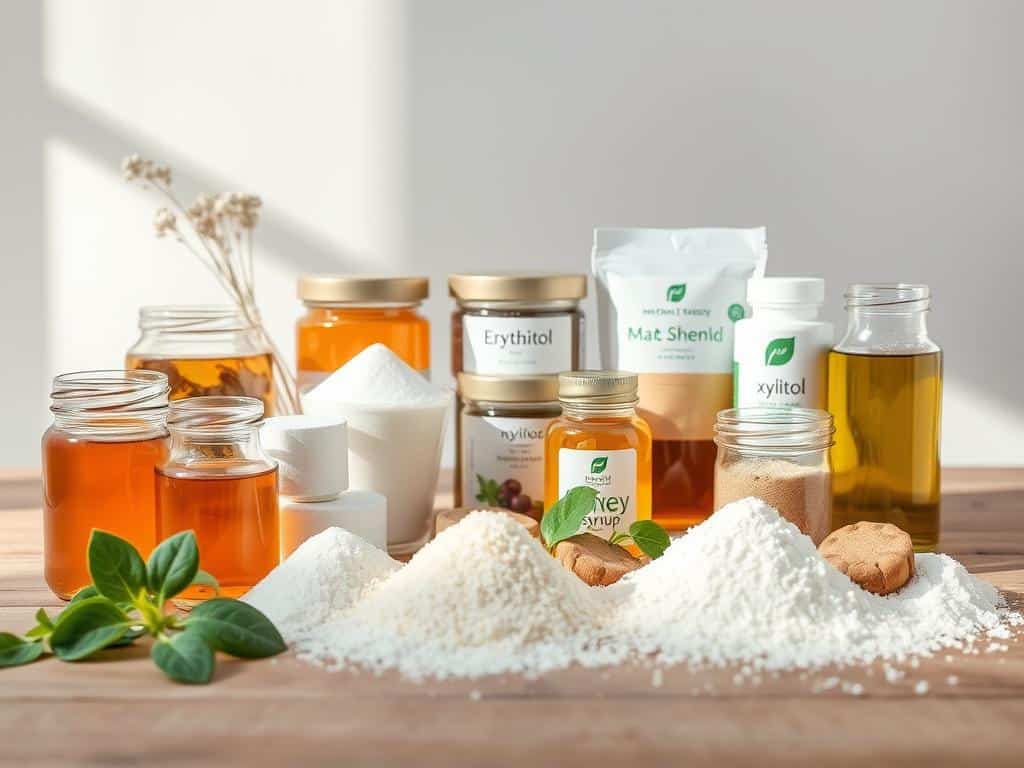
Sugar alternatives help sweeten foods and drinks without the added calories or carbs found in regular sugar. Many come from natural sources like plants and barely go through any processing. They provide a healthy sweetness, fitting various diets. Stevia, monk fruit, and erythritol are some options, each with its distinctive taste.
Why Choose Sugar Alternatives?
For those managing glucose levels, such as people with diabetes or on low-carb diets, sugar alternatives are beneficial. They barely affect blood sugar levels. So, they’re perfect for keeping insulin levels steady. Many folks find that these sweeteners lower their cravings for sugary snacks and help them live healthier.
Health Impacts on Insulin Levels
Studies indicate that certain natural sweeteners can keep blood sugar levels steady and may boost insulin production. Stevia and monk fruit, for instance, have a low glycemic index, great for those focusing on health. However, some artificial sweeteners, despite being labeled as diabetes-friendly, may not aid glucose control as well. Natural options usually have more benefits and fewer risks compared to artificial or processed sweeteners.
Top Sugar Alternatives for Diabetes Management
Managing diabetes means making smart choices about sweeteners. I find stevia and monk fruit very helpful. They have special qualities that let us enjoy sweet tastes without making our blood sugar levels jump. Next, I’ll look into coconut palm sugar. It’s a trendy choice but we need to be careful with it. Lastly, we’ll talk about erythritol. It’s a low-calorie sweetener that’s worth considering, especially for those watching their caloric intake.
Natural Sweeteners: Stevia and Monk Fruit
Stevia is popular because it can help keep blood sugar levels stable. It comes from the Stevia plant leaves and has no calories. It’s much sweeter than regular sugar. Monk fruit extract is another option. Its main parts, mogrosides, don’t affect blood sugar the same way. So, these sweeteners are good for people with diabetes who still want something sweet.
Coconut Palm Sugar: A Trendy Option
Coconut palm sugar is now a trendy way to sweeten things up. It has a low glycemic index, which may help people with diabetes. But it’s similar to regular sugar in having calories. So, we need to use it carefully. Knowing how to balance its good and bad sides is key to managing diabetes well.
Erythritol: The Low-Calorie Sugar Alcohol
Erythritol is great for those looking for low-calorie sweeteners. It has hardly any calories. This makes it an appealing choice for people trying to cut calories but still wanting sweetness. Some people might not feel great after eating erythritol, so it’s important to see how it affects you. Learning about different sweeteners helps in picking the best one for managing diabetes.
Conclusion
Setting my sights on a healthier way of living, I’ve learned how crucial it is to choose wisely when it comes to sugar substitutes. Sweeteners like Stevia, Monk Fruit, and Erythritol provide healthier options. They help keep our insulin levels steady. Adding these alternatives to my meals has allowed me to indulge in sweet tastes without the unwanted sugar highs. This is especially important for those keeping an eye on diabetes.
Each sugar substitute has its own set of pros and cons. Finding what works best for me required a custom approach. This was key to making positive changes in how I live. Talking to food and health experts can help us figure out which options are best for our personal health goals.
Our main aim should be to cut down on sugar overall, not just replace it with something else. Balancing our diet means we can still enjoy sweet things but in a healthier way. With the right substitutes, I’m hopeful about sticking to a diet that’s good for both my taste and health.