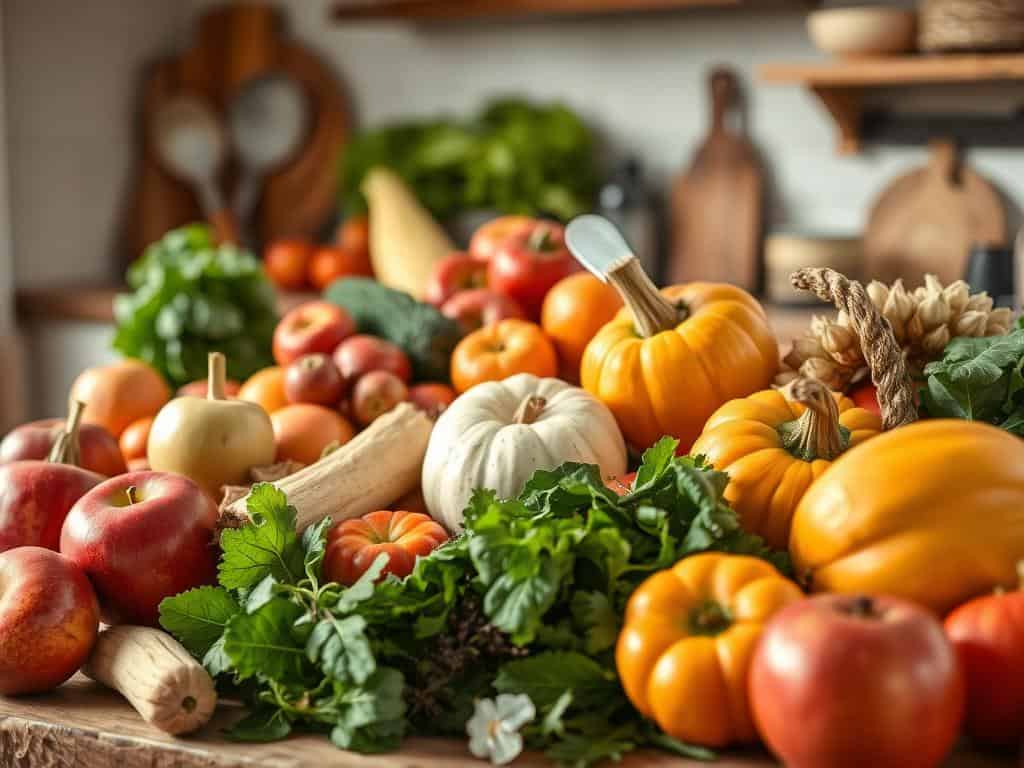
It was a sunny afternoon when I visited a local farmers’ market. The vibrant colors of fresh produce caught my eye as I walked around. Juicy strawberries peeked out from their baskets, ready to be picked.
While talking to a farmer, I learned those strawberries were picked just hours ago. They were full of flavor and nutrients. This chat introduced me to the idea of seasonal eating. It’s about eating fruits and veggies at their prime and in tune with my area’s natural cycles.
This approach could improve my health with fresher choices and let me enjoy various flavors all year. Plus, I liked the idea of supporting local farmers. I realized my eating habits were about to get better.
The Benefits of Seasonal Eating
Eating with the seasons can change your diet for the better. It makes you healthier and improves your eating experience. Choosing to eat what’s in season can be good for anyone wanting to feel better.
Enhanced Nutritional Value
Seasonal food is richer in nutrients. Fruits and veggies picked when ripe are full of vitamins and antioxidants. For example, fall’s root veggies like carrots offer great benefits. Eating fresh, seasonal food means getting more essential nutrients and enjoying a variety of tastes.
Superior Flavor
Seasonal eating makes food taste better. Fruits and veggies grown in their season are packed with flavor. The sweetness of summer tomatoes and fall’s crisp apples are unbeatable. This makes cooking and eating truly enjoyable.
Cost-Effectiveness
Eating seasonally can save you money. Local markets often lower prices on plentiful seasonal produce. Buying these items helps you eat healthily while saving money. With fresh options always around, eating well doesn’t have to be expensive.
How Seasonal Eating Supports Local Communities
Choosing seasonal foods has major benefits for local areas. It makes meals better and helps the economy and environment. This way of eating is key for growing communities and using food resources wisely.
Economic Impact
When I buy seasonal goods from local markets, I help the area’s economy. Spending money locally keeps it in the community. It creates jobs and improves life for farmers and local makers. This makes the community stronger. It lets buyers and sellers form a bond and learn about where their food comes from.
Environmental Benefits
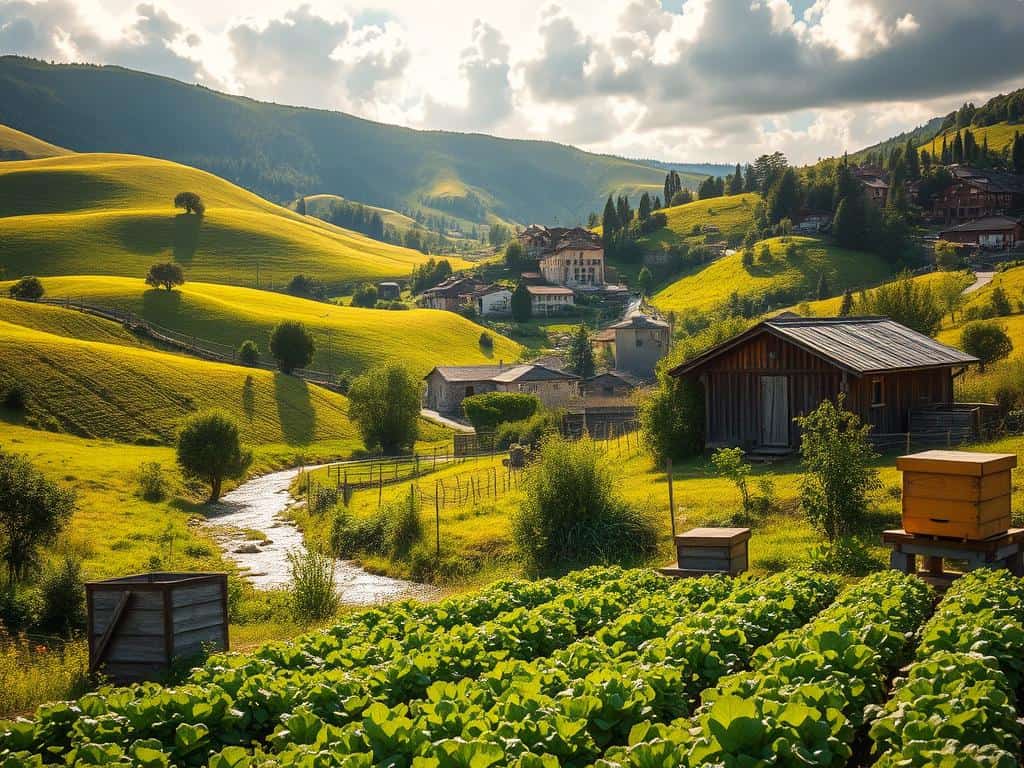
Seasonal eating is great for the planet too. Foods grown locally need less transport, cutting down on harmful gases from trucks traveling far. I like knowing my food choices help keep the earth clean. They support farming that’s good for the earth and avoids harmful chemicals.
Guidelines for Practicing Seasonal Eating
To embrace seasonal eating, I focus on shopping at farmers’ markets and planning my meals carefully. These steps make my cooking better and help local farmers too.
Shopping at Farmers’ Markets
Farmers’ markets are the best for fresh, seasonal food. Walking among stalls full of colorful fruits and veggies is fun. It’s also great to talk to farmers and try new things that supermarkets don’t have. I love looking for special items like summer’s heirloom tomatoes or fall’s root vegetables.
Planning Seasonal Meals
Planning meals with seasonal foods is creative. I find seasonal recipes to try. For example, a fresh asparagus risotto in spring or a butternut squash soup in autumn. This keeps my menu interesting and matches what’s fresh right now. By using *seasonal* ingredients, I up with delicious, healthy meals.