Did you know almost 80% of people in the U.S. live in cities? This big move to cities has led to cool ideas like urban agriculture. People are creating their own food sources, like community gardens. This is super important for fighting climate change and ensuring everyone has enough to eat. These city farming projects do more than grow food. They bring neighbors together. It shows us urban farming is a key part of solving today’s big problems.
Key Takeaways
- Urban areas are home to nearly 80% of the U.S. population.
- Community gardens enable local communities to enhance food security.
- Urban agriculture promotes food sustainability in cities.
- Local food systems strengthen community ties and resilience.
- Urban farming addresses challenges posed by climate change.
- Innovative approaches in food production are essential for the future.
The Rise of Urban Agriculture
As cities grow, so does their need for food. Urban agriculture has become key to meeting this demand. It makes fresh produce available for city dwellers. This approach offers a way to feed growing populations without relying on traditional farms far away.
Understanding Urbanization and Food Demand
City growth puts pressure on food supplies. It’s crucial to meet the rising demand from larger populations. Urban farming is a smart answer. It lets people grow their own food, decreasing the need for long-distance shipping.
Innovative Approaches to Food Production
New urban farming methods are changing the game. Technologies like sensors and drones help farmers get more from their crops with less waste. It’s a smarter way to farm.
Vertical farming is another exciting development. It involves growing crops in layers, one on top of the other. This method saves space and allows for farming in the heart of cities. People can enjoy fresh food all year round.
Community Gardens: A Sustainable Solution
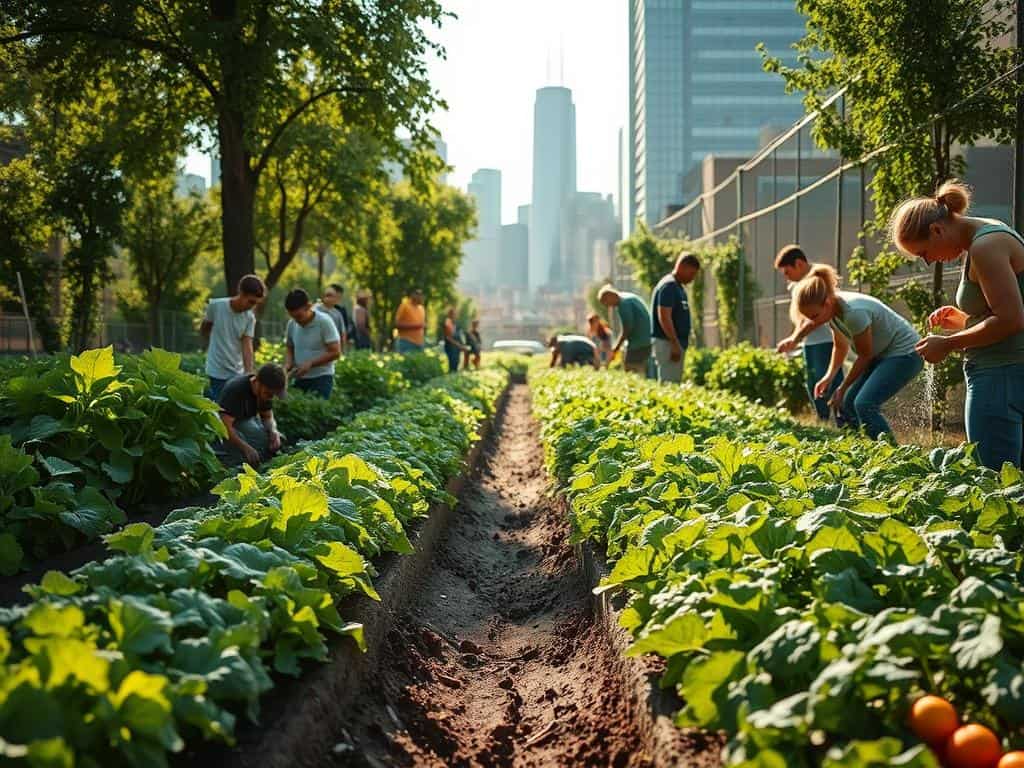
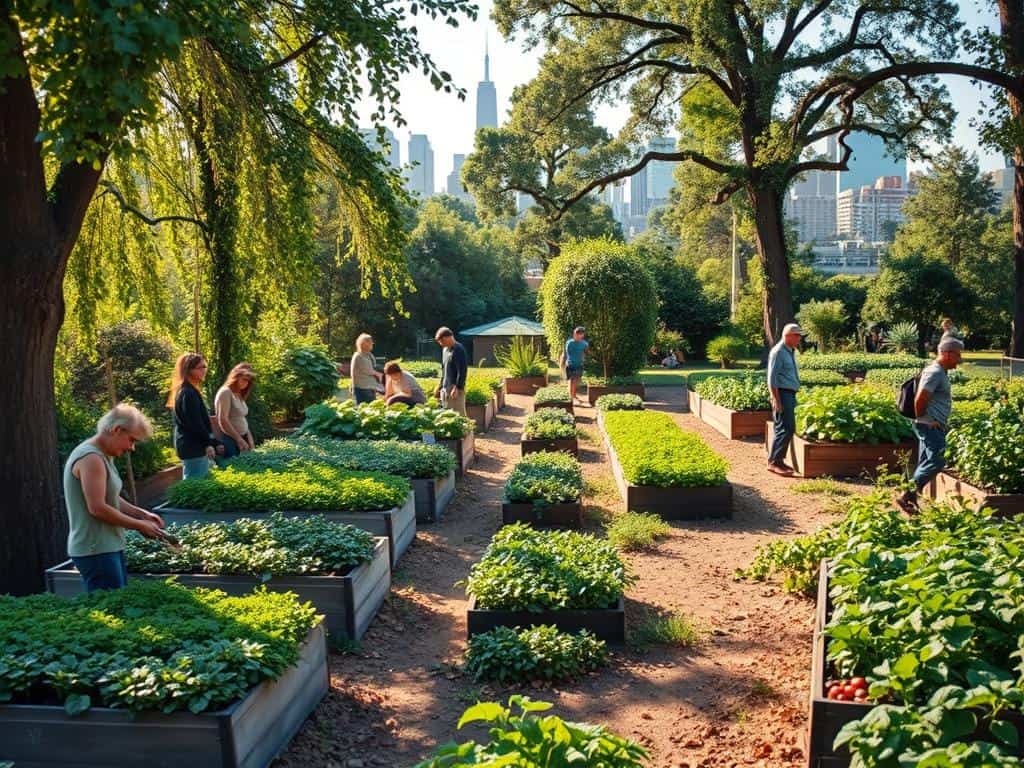
Community gardens help improve local gardening and bring people together. They offer more than just space for planting. People share resources, skills, and their love for gardening here. By gardening together, neighbors strengthen their connections. They also help solve the problem of food security.
Building Community through Local Gardening
Local gardening in these gardens fosters teamwork and involvement. Everyone works together, turning small plots into thriving gardens. This effort leads to fresh food, new friendships, and strong community bonds. People feel proud and capable of managing their food sources.
The Impact of Community Gardens on Food Security
Community gardens boost food security by offering fresh food in areas lacking it. Visiting different gardens, I see unused spaces turned into green, productive areas. They’re key in helping communities control their food sources. These efforts enable residents to grow their own food. This supports a sustainable and independent approach to eating that benefits everyone.
Challenges and Opportunities in Urban Farming
Urban farming faces many hurdles, like tough rules and finding space to grow. These issues are even harder for low-income areas, showing big gaps in who can get fresh food. We need to address these problems quickly.
The Complex Food Supply Chain
The food supply chain is tricky, making it hard for city farms to thrive. Problems with moving goods and setting prices can stop local produce from reaching people. A clear, fair food chain is vital for access to healthy food.
When urban farmers overcome these challenges, they become crucial in offering healthy food choices. They make a big difference in their communities.
Collaboration for Better Policies
Working together, city farmers, officials, and groups can enhance food policies. This teamwork leads to creative ways to support environment-friendly farming. It helps change food policies to help city farming efforts.
This cooperation means better support and less hunger in cities. It shows how working together can make a real difference.
Conclusion
In urban communities, it’s crucial to adopt sustainable food practices. This strengthens the community. Community gardens and urban farms do more than just reduce hunger. They also allow people to control where their food comes from.
By growing food locally, cities depend less on outside sources. This makes them more self-sufficient and healthier.
The success of urban farming relies on our ability to work together and innovate. By focusing on local food practices, we improve life for everyone. Urban farming brings people together and builds stronger community bonds.
The future of food in cities is bright if we keep supporting local food systems. These systems help our communities grow strong and resilient. They ensure communities not only flourish from the food they produce but also from the connections they foster.