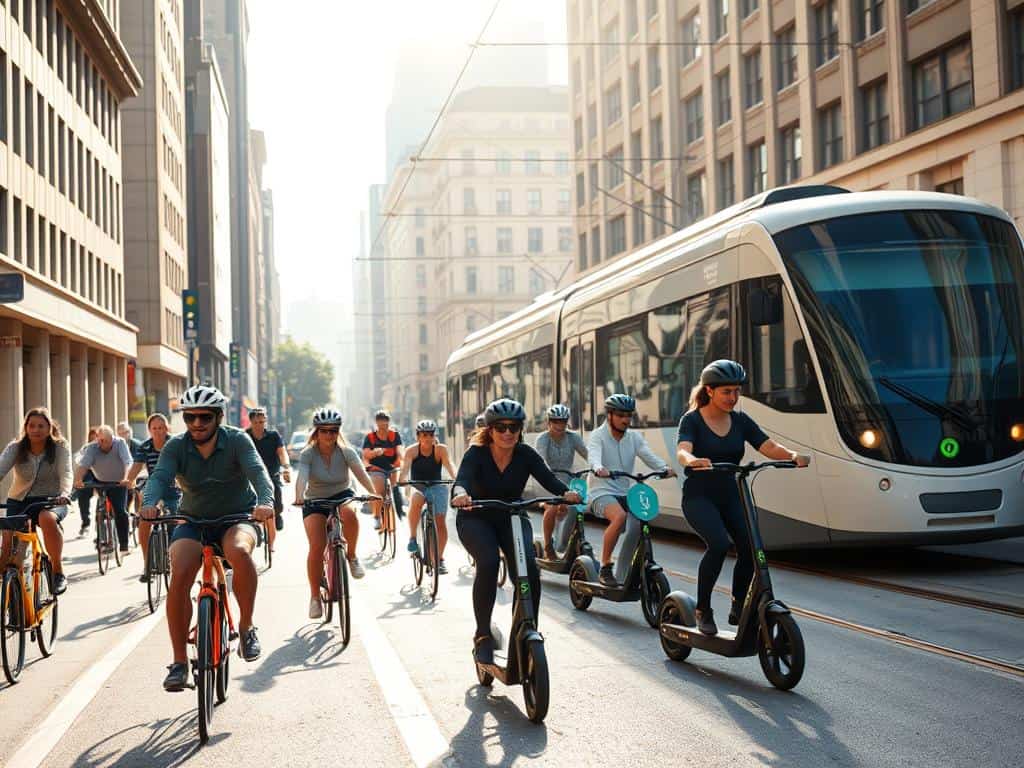
As I started my day, with coffee in hand and traffic noise around, I thought about my commute. It struck me that driving alone not only stressed me out but also harmed the environment. It was time for a change.
Looking into eco-friendly travel, I found many positives. Moving away from cars can boost our health and make cities better. This step towards greener ways can also inspire others to help our planet.
This article talks about using less cars and choosing walking, cycling, or public transport instead. Our aim is to see commuting differently, pushing us all towards a greener future.
Key Takeaways
- Transportation is a major contributor to carbon emissions.
- Adopting eco transport options can significantly reduce one’s carbon footprint.
- Walking provides zero emissions and promotes personal health.
- Cycling and e-bikes offer efficient, eco-friendly mobility solutions.
- Public transit can enhance community connectivity and reduce traffic congestion.
- Making small changes in commuting habits can lead to big environmental benefits.
Understanding the Impact of Transportation on the Environment
Transportation is key in our daily lives but it’s harming the planet. It leads to a lot of CO2 emissions, which are bad for the Earth. We need to start using eco-friendly ways to get around to make things better.
Transportation’s Role in Carbon Emissions
The transportation sector causes a lot of the world’s carbon emissions. In the USA, it’s about 23% of all emissions. Cars and trucks use fossil fuels, which is not good for our planet. If we use green transportation, we can lower the harm we do to Earth.
Health Risks from Carbon Emissions
Car emissions don’t just hurt the Earth; they affect our health too. They can cause asthma, lung cancer, and heart problems. This shows we need better options for getting around. Choosing green transportation can keep us healthy and help the planet.
Exploring Green Transportation Options
I’m looking into ways to cut my carbon footprint. I understand that using eco-friendly transport can really help our planet. Walking, biking, riding e-bikes, and taking public transit are not just smart choices. They also make our future more green. Each way to travel has its own good points. They make my day better and are great for the Earth too.
Walking: The Zero-Emission Choice
Walking is the best pick if you want to avoid emissions. It doesn’t need gas and doesn’t make pollution. It also makes you healthier and happier. Adding walks into my day helps me live better. And it cuts down on my environmental impact. Even a quick walk or a longer one to work has many pluses. It keeps you fit and lowers stress.
Cycling and E-Bikes: Eco-Friendly Mobility
Cycling and the growing interest in e-bikes are exciting for green living. Biking lets me enjoy nature and cuts down on CO2 from transportation. Studies say switching a car ride for a bike ride drops your CO2 footprint a lot. E-bikes give a helpful push for those who might find biking hard. This makes biking a choice for more people, which is good for us and the planet.
Public Transit: A Community Solution
Public transit is a key way to get around more greenly. By taking buses, trains, or subways, I help reduce cars on the road. This cuts down on harmful gases. Public systems move lots of people at once, changing how we travel every day. Putting money into these options is not just eco-friendly. It also helps us connect with others and makes travel easy for all.
Conclusion
Climate change makes it clear that choosing green transportation is crucial. In this article, the benefits of walking, cycling, and public transit were discussed. These options can lower emissions that harm our planet.
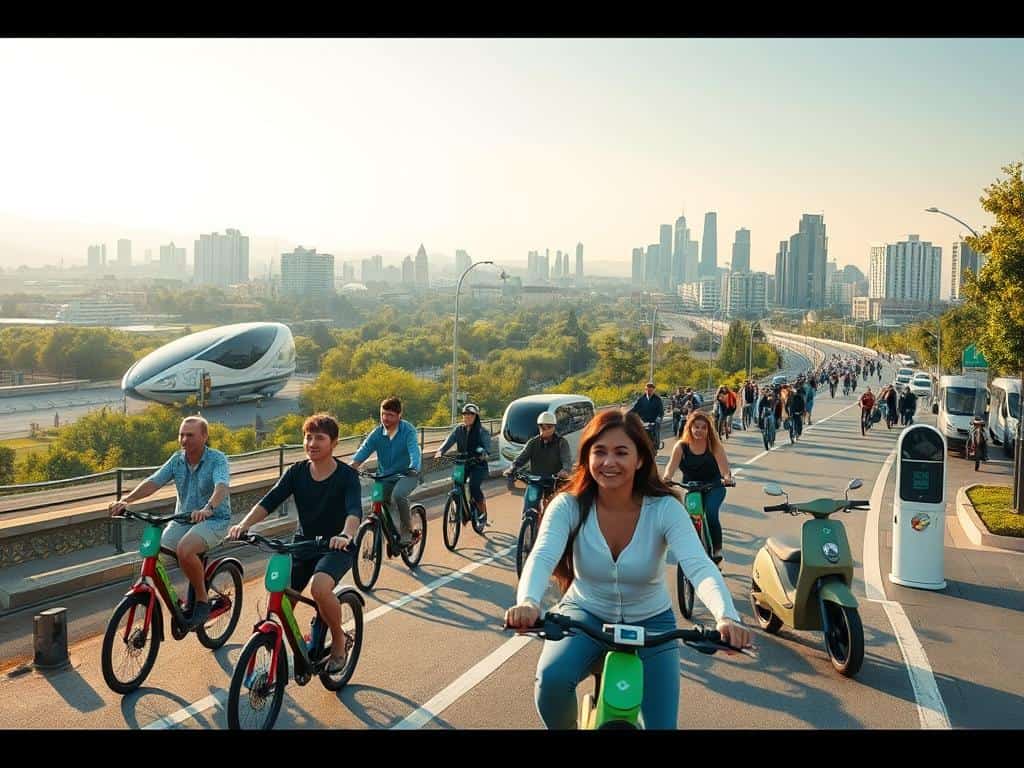
Making even small changes to how we travel can lead to a greener future. Choosing to bike or use public transport plays a big part. These choices not only improve our health but also benefit our communities.
To sum up, a sustainable future starts with us rethinking our car use. By picking greener ways to get around, we help the planet and inspire others. Let’s work together to build a sustainability culture for future generations, by making green transport part of our daily lives.