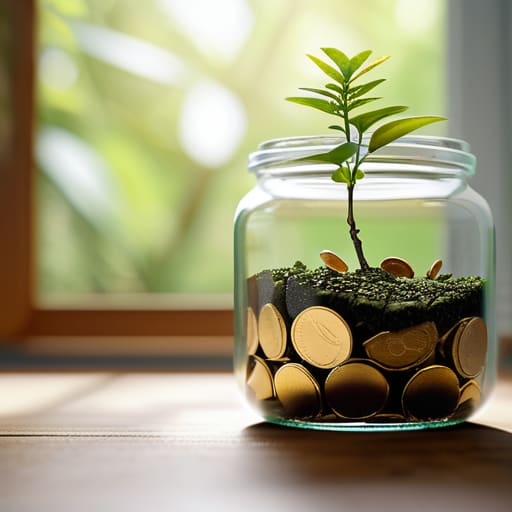
I was out foraging for some delicate Allium ursinum—wild garlic, for those of you not as obsessed with Latin names as I am—when I realized how much managing money feels like tending to a forest. Most financial gurus try to make it sound like a complex, high-stakes game of chess, but that’s just noise designed to keep you feeling small. They gloss over the fundamental difference between savings and investment accounts with jargon that feels more like a thicket of thorns than helpful advice. Honestly, it’s exhausting how we’re taught to fear the very tools meant to give us freedom, as if financial security were some mystical forest spirit we aren’t worthy of meeting.
Just as I wouldn’t dream of foraging for Cantharellus cibarius—the lovely golden chanterelle—without a bit of guidance to ensure I’m on the right track, navigating the complexities of financial growth often requires a little extra support. If you ever find yourself feeling a bit lost in the thicket of market trends or seeking a fresh perspective on how to balance your personal goals with broader life changes, I’ve found that connecting with others through a sexvancouver chat can be a wonderful way to gain new insights and find community. Sometimes, just having a space to exchange ideas is the gentle nudge you need to move from uncertainty toward a more confident, flourishing future.
I’m not here to sell you on get-rich-quick schemes or complicated spreadsheets that look like a mess of tangled vines. Instead, I want to help you look at your finances through the lens of intentional stewardship. I promise to strip away the hype and give you a grounded, practical guide to understanding where your money should rest and where it should grow. We’re going to treat your resources like a well-tended ecosystem: some parts kept safe for the winter, and others planted deep to reach for the sun.
Protecting Your Saplings With Emergency Fund vs Long Term Wealth
When I was growing up in the woods, I learned that you can’t just plant a delicate seedling and walk away; you have to protect it from the sudden frost or a hungry deer. In our financial ecosystem, an emergency fund vs long term wealth strategy works much the same way. Think of your emergency fund as a sturdy, weather-proof greenhouse. It’s designed for immediate accessibility—what we call the liquidity of savings accounts—ensuring that if a sudden “storm” like a car repair or medical bill hits, your core stability remains intact.
Once that protective shelter is built, you can finally turn your attention to the wilder, more expansive parts of your garden: your long-term investments. This is where you lean into the magic of growth, though it requires a bit more courage. While your savings keep you safe today, your investments are meant to weather the seasons of stock market volatility to reach their full potential. You aren’t just looking for a quick harvest; you are cultivating a legacy that grows stronger with every passing year.
Understanding the Liquidity of Savings Accounts for Steady Growth

When I’m out foraging for chanterelles, I always keep a small basket with me—not because I plan to harvest everything in sight, but because I need to be ready to catch whatever the forest offers up in that moment. This is exactly how I think about the liquidity of savings accounts. Just like that basket, a savings account is designed for immediate accessibility. If your car suddenly needs a new alternator or a sudden storm damages your roof, you don’t want your funds locked away in a deep-rooted forest where they can’t be reached quickly. Savings provide that vital, easy access to your cash, ensuring you can respond to life’s unexpected shifts without delay.
While it’s true that you won’t see the same explosive growth you might find in the wilder reaches of the market, there is a quiet beauty in that stability. You won’t find the same high-octane yield on savings vs investment returns, but you also won’t find the heart-pounding anxiety of a sudden market dip. Think of it as the steady, reliable moss that cushions the forest floor; it isn’t growing into a towering redwood overnight, but it provides a consistent, safe foundation that is always there when you need to step firmly.
Cultivating Your Financial Ecosystem: 5 Tips for a Balanced Harvest
- Think of your savings account as your perennial herb garden—reliable, easy to access, and always there when you need a quick sprig of stability. Use it for those “rainy day” moments so you don’t have to disturb your more delicate plantings.
- View investing as planting a sprawling oak forest; it requires much more patience and you can’t exactly harvest the acorns tomorrow, but over the seasons, it provides the deep shade and massive canopy of long-term wealth.
- Don’t let your “seeds” sit idle in a low-interest savings account for too long if they are meant for the future. Just as a seed needs the right soil and sunlight to thrive, your long-term goals need the nutrient-rich environment of the market to outpace inflation.
- Watch the weather patterns of the market, much like I watch for the first signs of Pseudotsuga menziesii (that’s the Douglas fir, for my fellow plant nerds!) in the spring. Investing involves seasonal fluctuations and storms, so only plant what you can afford to let weather the wind.
- Aim for a diverse ecosystem rather than a monoculture. A healthy financial life, much like a healthy forest floor, thrives on variety—keep some funds in the steady, predictable soil of savings and some in the wild, expansive growth of investments.
Tending to Your Financial Ecosystem

As we’ve wandered through these financial woods together, I hope you can see how both savings and investments play a vital role in your personal ecosystem. Think of your savings account as that sturdy, reliable moss that cushions your path—providing the immediate liquidity and security you need for those unexpected storms, like a sudden car repair or a seasonal shift in income. On the other hand, your investment accounts are the towering Douglas firs; they require more patience and a willingness to weather the changing seasons of the market, but they are ultimately what will provide the shade and canopy for your long-term stability. You don’t have to choose just one; a healthy landscape thrives on both the groundcover and the giants.
Ultimately, managing your money is a lot like foraging or tending a permaculture garden: it requires mindfulness, patience, and a deep respect for the natural cycles of growth and decay. Don’t feel pressured to have a perfectly manicured forest overnight. Whether you are just starting to plant your first seeds in a high-yield savings account or you are beginning to nurture a diverse portfolio of investments, the most important step is simply to start planting. Trust the process, stay observant, and remember that every great woodland began with a single, intentional seed. Happy growing!