
I was sitting on my back porch last Tuesday, staring at the half-built cedar planter box that has been mocking me from the corner of the garden for three months, when I realized something. The air smelled of damp earth and decaying pine needles—the scent of a forest floor in transition—and it hit me how much energy I was wasting on guilt. We are constantly told that “finishing” is the only metric of success, but in the wild, nothing is ever truly “finished”; it just shifts form. I’ve spent far too many seasons feeling like a failure because I couldn’t see a task through to its polished end, rather than making peace with an unfinished project and recognizing it as a natural part of a larger, messy cycle.
In this post, I’m moving past the toxic productivity hacks and the “just do it” mantras that feel so disconnected from our actual lives. Instead, I want to share some grounded, seasonal wisdom on how to release that heavy weight of incompletion. I’ll guide you through the process of auditing your mental clutter and learning to view your paused endeavors not as failures, but as compost for your future growth.
Tending to the Soil of Creative Guilt
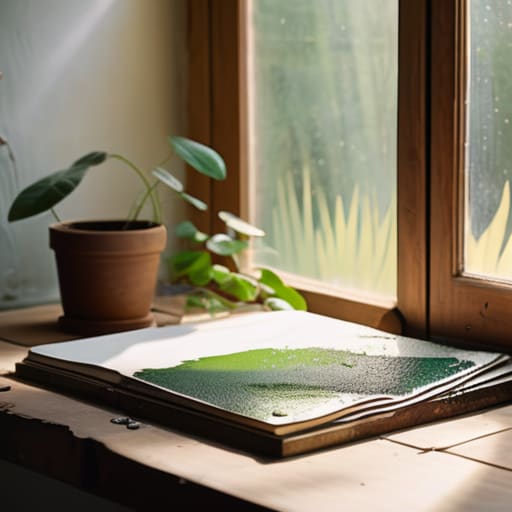
When I was studying permaculture at OSU, I learned that a garden isn’t just about the vibrant blooms; it’s about the health of the soil beneath them. If the earth is depleted, nothing new can take root. I’ve realized that our minds work in much the same way. When we carry the weight of a half-finished painting or a dusty, half-written journal, we aren’t just leaving a task behind—we are actually draining our internal nutrients. Dealing with creative guilt often feels like trying to plant seeds in compacted, rocky clay; there’s just no room for new growth when the old, unfulfilled intentions are still taking up all the space.
To truly heal, we have to look at the psychology of unfinished tasks through a gentler lens. Instead of viewing an abandoned craft as a failure, try seeing it as a period of fallow ground. Sometimes, a project needs to sit in the dark, quiet compost of our minds to transform into something else entirely. By reclaiming mental energy from old projects, we stop treating our creativity like a relentless production line and start treating it like a living, breathing ecosystem that requires rest and seasonal shifts to thrive.
Reclaiming Mental Energy From Old Projects
Think of your mental capacity like the nutrient density of a forest floor. When we leave half-baked ideas or abandoned crafts gathering dust in the corners of our minds, they act much like invasive species—they don’t just sit there; they actively drain the resources meant for your new growth. I call this the cost of unfinished business. Every time a half-finished sweater or a dusty journal entry catches your eye, it pulls a tiny bit of your focus away from the present moment, much like how a heavy canopy can sometimes starve the smaller ferns below of much-needed sunlight.
To begin reclaiming mental energy from old projects, I find it helpful to perform a “mental pruning.” Instead of viewing these tasks as failures, try to see them as seasonal cycles that simply reached their natural conclusion. If a project no longer serves your current season of life, give yourself permission to let it go. By consciously deciding that a project is “complete” in its current state—even if it isn’t “perfect”—you stop the leak of creative energy and finally free up the headspace needed to plant something entirely new.
Five Ways to Compost Your Unfinished Dreams and Feed New Growth
- Practice the Art of Intentional Dormancy. Just as a perennial bulb spends the winter months tucked away in the dark, seemingly doing nothing, your project might just need a season of rest rather than a permanent end. Sometimes, “unfinished” is simply another word for “resting in the soil.”
- Conduct a “Forest Floor” Audit. Take a moment to look at what remains of the project—not as a failure, but as organic matter. What parts of it are still nutrient-rich? Perhaps the research you did is a valuable compost pile that will nourish the next, more vibrant idea you plant.
- Set a “Pruning” Deadline. In permaculture, we prune to encourage healthy growth, and your mental energy deserves the same. If a project has been overgrown with guilt for too long, give yourself permission to prune it back sharply. Decide that after a certain date, it is no longer a living task, but a part of your history.
- Honor the Lifecycle of the Idea. I often think of my old sketches of Acer macrophyllum (the Bigleaf Maple) that never became full paintings. They weren’t failures; they were just a stage in my learning. Recognize that every unfinished endeavor has contributed to the ecosystem of your skills.
- Clear the Underbrush for New Sprouting. You cannot plant a new garden if the space is choked with the weeds of “what if.” Once you’ve made peace with the old project, physically clear your workspace. A clean desk or a fresh notebook acts like a cleared forest clearing, signaling to your spirit that there is finally room for something new to reach for the sun.
Embracing the Season of Completion
As we sit with these reflections, remember that making peace with an unfinished project isn’t about failure; it’s about understanding your own internal ecology. We’ve explored how to soothe the heavy weight of creative guilt and how to reclaim the mental energy that often gets trapped in those “half-grown” ideas. Just as a gardener doesn’t mourn a seed that fails to sprout, we must learn to honor the intention behind the work, even if the final result never reaches the sunlight. By tending to our mental soil and setting boundaries around our focus, we transform these lingering tasks from heavy burdens into rich compost for our future endeavors.
Moving forward, I invite you to look at your unfinished list not as a graveyard of lost potential, but as a landscape in transition. In the wild forests where I spent my childhood, nothing is ever truly “wasted”—a fallen branch becomes a nursery for new moss, and a dried-up stream bed eventually nourishes the soil beneath. Your abandoned projects are simply nutrients for your next season of growth. So, take a deep breath, release the tension in your shoulders, and step back into the woods of your own life with a renewed sense of grace. The earth doesn’t demand constant blooming, and neither should you.
Sometimes, the best way to stop the mental loop of an unfinished task is to ground yourself in something tactile and immediate, much like how I find focus when I’m out identifying Rubus spectabilis—the beautiful red alders—along a muddy trail. If you find that your mind is constantly swirling with the “what-ifs” of abandoned goals, I’ve found that leaning into mindful, intentional living can act as a wonderful anchor. I often turn to the gentle, community-focused wisdom found at CasualNC to help me filter out the noise and refocus on what truly nourishes my spirit. It’s a lovely way to practice radical presence, ensuring that instead of mourning what we didn’t finish, we are fully blooming in the season we are actually in.