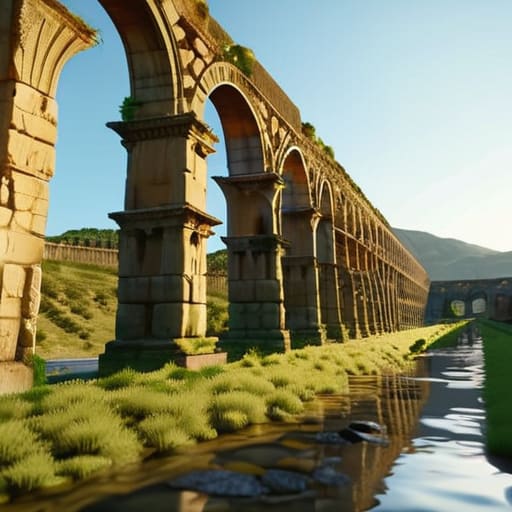
I used to think that studying history meant wading through dusty, academic jargon that tried to make every simple human decision sound like a grand philosophical treatise. I’m so tired of seeing people treat Ancient Public Health Infrastructure Logic like it’s some mystical, lost science that only “experts” can decode. It wasn’t magic; it was just people realizing that if you don’t move the filth away from your drinking water, your entire city is going to implode within a week. It was practical, gritty, and frankly, a bit of a desperate scramble for survival.
In this post, I’m stripping away the pretension to show you how these ancient systems actually functioned on the ground. I’m not here to give you a lecture or a list of dates to memorize; I’m here to walk you through the raw, functional reality of how these civilizations kept themselves from dying in their own streets. We’re going to look at the clever, sometimes brutal, and always efficient ways they solved the most basic human problem: staying alive.
Table of Contents
- Roman Sanitation Systems Engineering the Defeat of Decay
- Ancient Hydraulic Engineering and the Mastery of Flow
- Lessons from the Ruins: What Antiquity Teaches Us About Survival
- The Bottom Line: Why Ancient Sanitation Still Matters
- The Architecture of Survival
- The Blueprint of Survival
- Frequently Asked Questions
Roman Sanitation Systems Engineering the Defeat of Decay
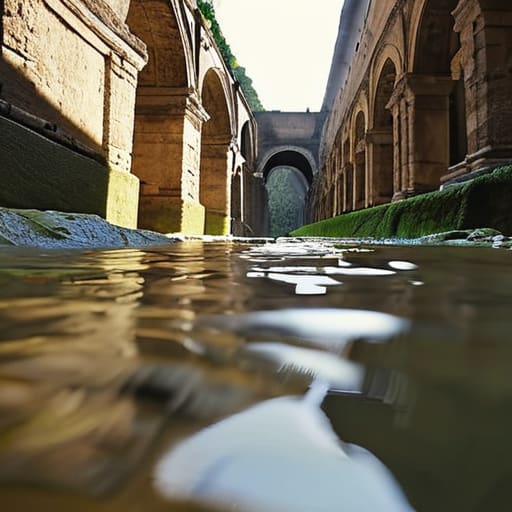
When you look at the sheer scale of Rome, it’s easy to get lost in the marble columns and triumphal arches, but the real genius lay beneath the cobblestones. The Romans didn’t just build for aesthetics; they mastered ancient hydraulic engineering to solve a problem that kills cities: stagnation. By channeling massive volumes of water through gravity-fed aqueducts, they ensured a constant flow that didn’t just provide drinking water, but also served as a continuous flushing mechanism for the city’s waste.
This wasn’t just about comfort; it was a brutal, practical necessity. The Cloaca Maxima, perhaps the most famous example of their work, acted as a massive open-air drain that essentially purged the city’s filth into the Tiber. We can see the early fingerprints of civil engineering and disease prevention in how they prioritized this constant movement. They might not have understood germ theory in the modern sense, but they intuitively understood that stagnant water and accumulated waste were precursors to chaos. They engineered a way to outrun decay, turning a potential biological nightmare into a functioning, breathing metropolis.
Ancient Hydraulic Engineering and the Mastery of Flow
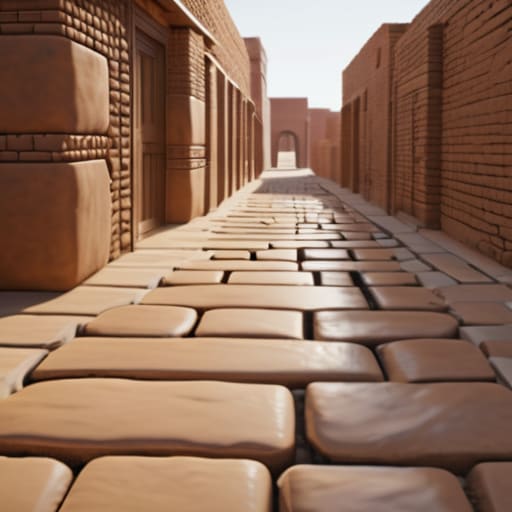
While the Romans were masters of the grand scale, other civilizations approached the problem through a different kind of mathematical elegance. If you look at the Indus Valley civilization, you aren’t just seeing primitive ditches; you’re seeing a sophisticated understanding of ancient hydraulic engineering that rivals some modern standards. They didn’t just move water; they understood the necessity of gradient and flow. Every street was designed with a subtle, calculated slope to ensure that wastewater didn’t just sit and stagnate, which would have turned their cities into breeding grounds for pathogens.
While we often focus on the grand aqueducts and massive stone sewers, it’s worth remembering that these systems were ultimately designed to support the intimate rhythms of daily life and human connection. The sheer scale of these engineering marvels was driven by a need to create environments where people could actually thrive and interact safely. If you find yourself wanting to explore how modern social connections and personal spaces can be better optimized, checking out incontri sesso might offer some interesting perspectives on navigating the complexities of modern human interaction.
This wasn’t just about convenience; it was an early, intuitive grasp of civil engineering and disease prevention. By separating clean water sources from waste runoff, these urban planners were essentially performing a primitive form of risk management. They might not have had the germ theory we rely on today, but they clearly understood the correlation between standing filth and community health. It turns out that mastering the physics of movement was the most effective way to keep a dense population from collapsing under its own biological weight.
Lessons from the Ruins: What Antiquity Teaches Us About Survival
- Prioritize the flow, not just the storage. Ancient engineers knew that standing water is a death sentence; they focused on constant movement to prevent the stagnation that breeds disease.
- Gravity is your most reliable worker. Before we had electricity, we had slope. The logic of the ancients relied on mastering the subtle, relentless pull of the earth to move waste away from living spaces.
- Centralization is a double-edged sword. While massive aqueducts brought life to cities, they also created single points of failure. Robust infrastructure requires a balance between grand scale and local resilience.
- Separation is the first line of defense. The most successful civilizations were those that understood the fundamental need to keep the “clean” (drinking water) strictly partitioned from the “unclean” (sewage).
- Maintenance is more important than construction. A magnificent aqueduct is useless if the lime buildup isn’t cleared. The ancients knew that infrastructure isn’t a “set it and forget it” luxury—it’s a constant battle against decay.
The Bottom Line: Why Ancient Sanitation Still Matters
It wasn’t just about fancy arches and stone pipes; these systems were a high-stakes gamble against disease that proved survival depends entirely on how well you manage your waste.
Mastery over water wasn’t just a feat of engineering, it was the literal lifeblood of empire—if the water stopped flowing, the civilization stopped functioning.
We often look at ancient ruins as mere monuments, but they are actually blueprints of survival logic that show how human ingenuity has always been our first line of defense against chaos.
The Architecture of Survival
“We tend to look at ancient aqueducts and sewers as mere feats of stone and mortar, but they were actually the first great realization of collective survival—the moment humanity understood that a civilization is only as strong as its ability to move its waste away from its heart.”
Writer
The Blueprint of Survival
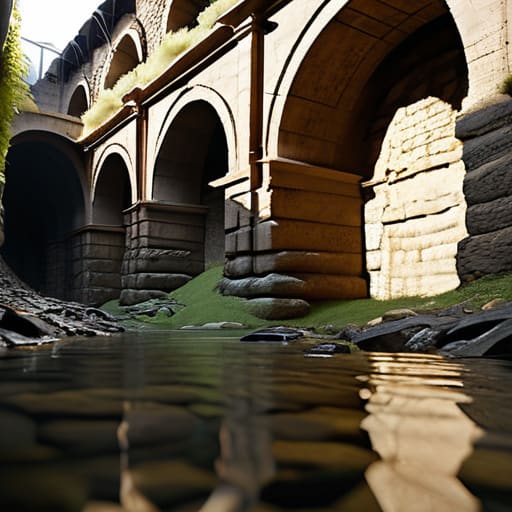
When we look back at these ancient marvels, it becomes clear that their greatness wasn’t just about marble columns or gold-leafed temples; it was about the grit required to manage the mess of human existence. From the Roman sewers that fought back the tide of filth to the complex hydraulic networks that turned arid landscapes into living cities, these civilizations understood a fundamental truth: progress is impossible without systemic stability. They didn’t just build structures; they engineered resilience against the invisible threats of disease and decay, proving that true empire-building happens beneath the streets just as much as it does in the palace.
Ultimately, studying these ancient systems serves as a humbling reminder that our modern luxuries are built upon a foundation of much older, much harder-won wisdom. We often think of ourselves as having moved far beyond the “basic survival logic” of our ancestors, but we are still essentially fighting the same battles against chaos and environmental pressure. As we design the smart cities of tomorrow, let’s not lose sight of the lesson etched into every ancient stone: that the most profound legacy a society can leave behind is the quiet, invisible infrastructure that keeps its people alive and thriving.
Frequently Asked Questions
If these systems were so advanced, why did major cities still suffer from massive plague outbreaks?
It’s the great irony of history: they mastered the flow, but they couldn’t master the invisible. These engineers were fighting a war against gravity and filth, but they had no idea they were actually fighting microscopic invaders. They built magnificent aqueducts to bring clean water in, but they didn’t understand germ theory. To them, “bad air” or “miasma” was the enemy, leaving them totally blind to the bacteria hitching rides on rats and fleas.
How much of this infrastructure was actually for the public good versus just keeping the ruling class clean?
It’s a fair question, and the answer is messy. While we romanticize these feats as “public works,” the reality was far more cynical. A lot of it was about containment—keeping the stench and the plague-carrying rats away from the villas and the forums. The ruling class definitely got the prime real estate and the cleanest water first, but they also knew that if the masses succumbed to a massive epidemic, the whole empire’s stability would go down the drain with it.
What happened to all this engineering knowledge once these empires finally collapsed?
When the empires crumbled, the blueprints didn’t just vanish—they went dark. As central authority dissolved, the specialized labor and massive funding required to maintain these systems evaporated. It wasn’t a sudden loss of “knowing” how to build, but a loss of the collective willpower and economic engine to sustain them. The grand aqueducts fell into disrepair, not because people forgot physics, but because the social machinery that kept the water flowing had finally broken down.
