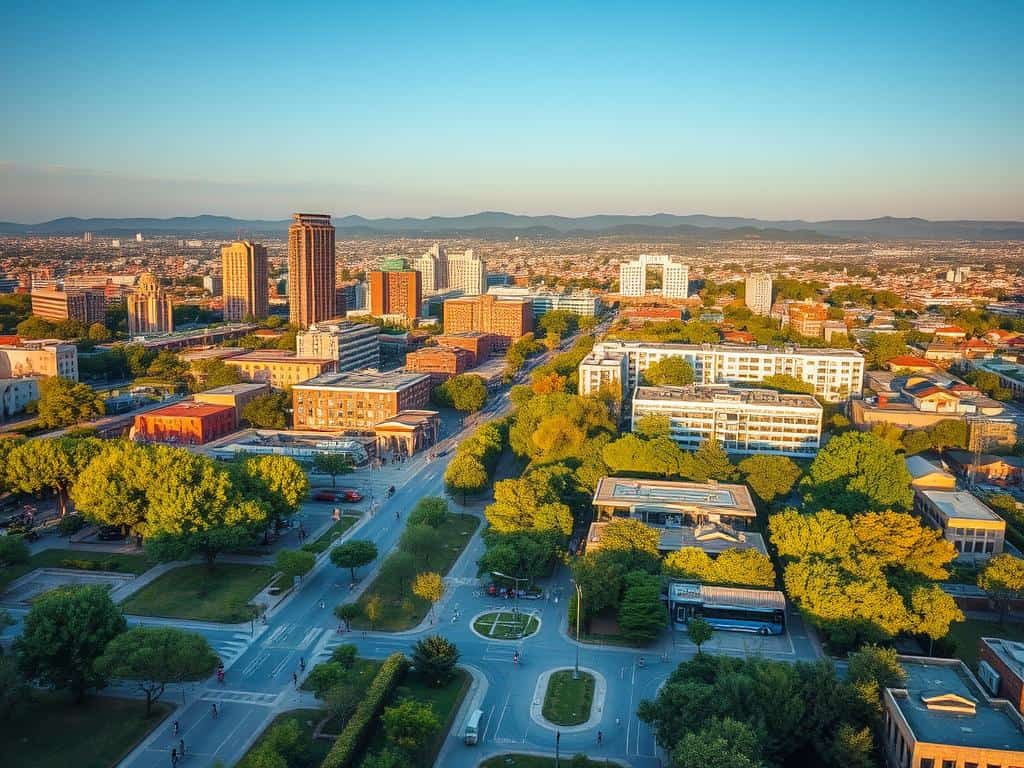
By 2050, the World Bank predicts that more than 70% of people will live in cities. This fact highlights the need for cities that improve our health and happiness. Cities are now getting creative with ways to make urban areas better for our well-being. Urban planners have a big job: they need to design places where people can be healthy and happy together. Through smart design, we can make a brighter future for everyone in the city.
Key Takeaways
- Over 70% of the global population will reside in urban areas by 2050.
- Healthy cities focus on enhancing physical and mental health.
- Urban wellness initiatives are crucial for vibrant community living.
- Rethinking urban spaces can drastically improve quality of life.
- Innovative city redesign meets the demand of growing populations.
Innovative Urban Designs for Healthy Cities
Urban design is key to our communities’ health. By making cities walkable and public spaces easy to get to, we can help people be more active. This not only makes us healthier but also brings us together, making our social ties stronger.
Creating Walkable Neighborhoods
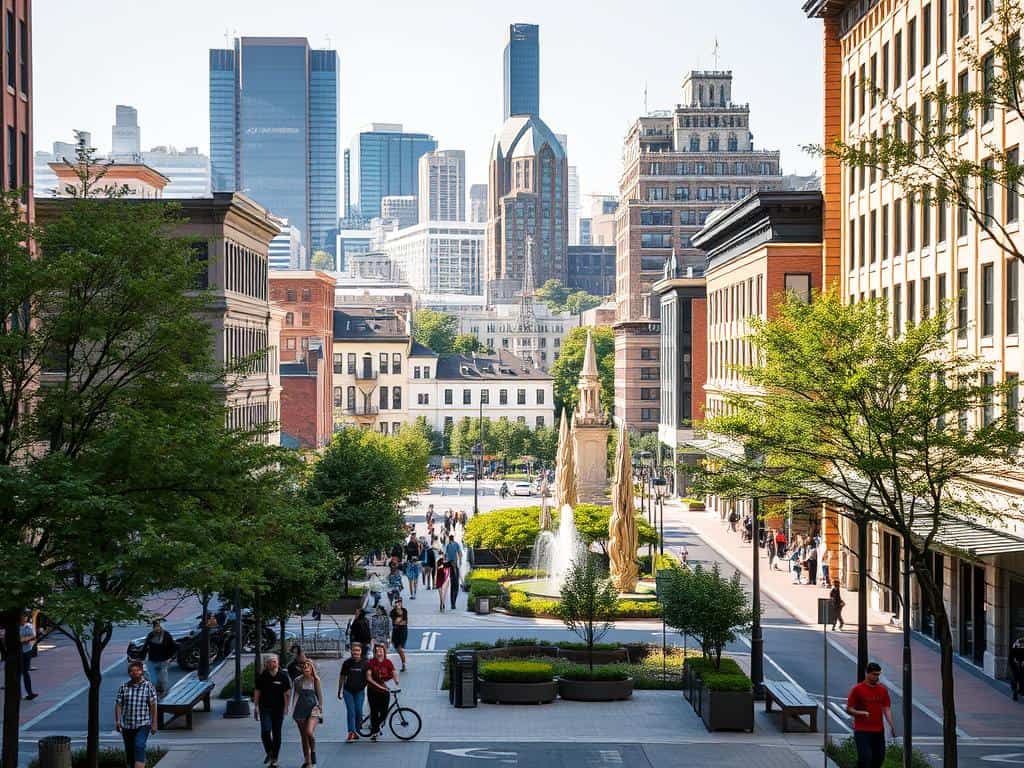
Walkable areas are central to healthier city living. Cities that focus on paths for walking, parks, and nearby shops support being active. People then prefer walking over driving, which cuts down on traffic and pollution. This change is good for the environment and life quality.
Enhancing Mental Well-Being through Community Design
City design isn’t just about buildings and roads; it’s also about mental health. Places that let us connect with nature, like parks and gardens, help reduce stress. They offer a calm spot away from city noise. Plus, spaces where people can meet build a strong, happy community.
Smart Solutions Driving Wellness in Urban Environments
Today’s cities are fast-moving. They are adding smart solutions to improve wellness. These include eco-friendly buildings which are good for health and happiness. They focus on being green and improving life quality. This leads to spaces that encourage being healthy.
Innovations in Sustainable Construction
Construction today uses green methods to blend with nature. This helps the planet and makes life better for people living there. Examples are buildings with solar panels and green roofs. By choosing sustainable construction, our cities become greener and healthier places for everyone.
The Role of Technology in Urban Health
Technology is key to better health in cities. It helps gather data to understand health trends, leading to better plans for community health. Tech also supports active ways to get around, like biking. This mix of technology and health efforts makes living in cities healthier and easier.
Conclusion
As we think about the future of our cities, we see a need for change. Urban redesign must focus on health and wellness to benefit society. By adopting new strategies, we can make our neighborhoods walkable and our cities green.
This change can improve our lives significantly. Looking at cities like Dubai, Chicago, and Barcelona shows us the way. These cities are leading by creating places good for people and the planet.
Changing urban areas to be healthier is about more than just design. It involves community engagement and sustainable actions. By embracing these ideas, we can face climate change and boost people’s well-being.
We will create cities that not only keep up with modern needs but also excel. Together, we can build places where living well is possible for everyone.
But making cities sustainable is not just about the buildings. It means changing how we live to focus on health and wellness. Seeing the progress in today’s cities gives me hope. I believe we can make a better future for all, no matter where we live.