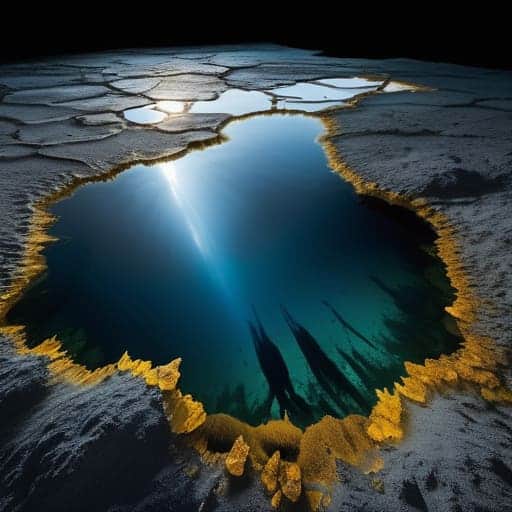
I remember sitting in a stuffy lecture hall, staring at a grainy slide of a seafloor landscape, while some professor droned on about “hypersaline benthic ecosystems” like he was reciting a grocery list. It felt so clinical, so detached, that it completely stripped away the sheer, terrifying wonder of what we were actually looking at. Most textbooks treat Deep-Sea Brine Pools as if they’re just another boring geological footnote, but let’s be real: finding a lake at the bottom of the ocean is utterly surreal. It’s not just a chemical anomaly; it’s a window into an alien world that shouldn’t exist, and the academic jargon usually just gets in the way of that feeling.
I’m not here to bore you with a PhD-level lecture or hide behind dense, impenetrable terminology. My goal is to strip away the fluff and give you the straightforward truth about these underwater death traps. We’re going to dive into how these pools actually function, the bizarre life forms that call them home, and why they are arguably the strangest places on our entire planet. No hype, no filler—just the raw, fascinating reality of the abyss.
Table of Contents
The Genesis of Hypersaline Underwater Lakes
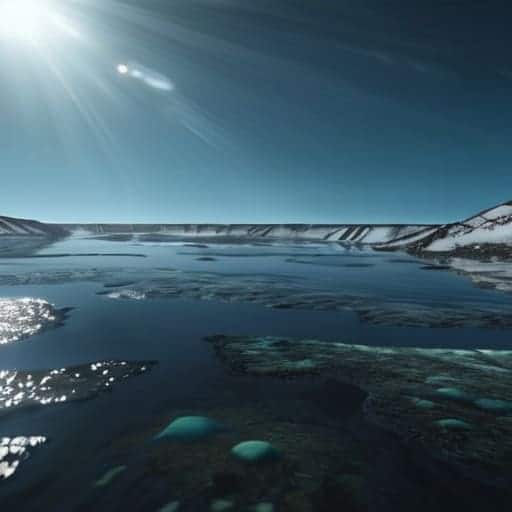
So, how do these bizarre “lakes” actually end up sitting there on the seafloor? It isn’t like a sink overflowing; it’s a slow, geological buildup. Most of the time, it starts with salt deposits buried deep under the ocean floor from ancient eras when the sea levels were completely different. Over millions of years, tectonic shifts or shifting currents trigger a massive release, allowing concentrated salt to seep upward. As this super-concentrated fluid escapes, it stays distinct from the surrounding seawater because it’s so much denser. This creates the foundation for oceanic brine lake formation, where the salt literally settles into its own distinct basin.
Once that heavy, salty layer establishes itself, it starts interacting with the surrounding environment in ways that feel almost biological. You often see these pools forming near areas of intense geological activity, where hydrothermal vent interactions play a massive role in pumping minerals into the mix. This constant influx of chemicals turns the pool into a high-stakes chemistry experiment, setting the stage for life that thrives on nothing but pure, raw energy.
Decoding Complex Oceanic Brine Lake Formation
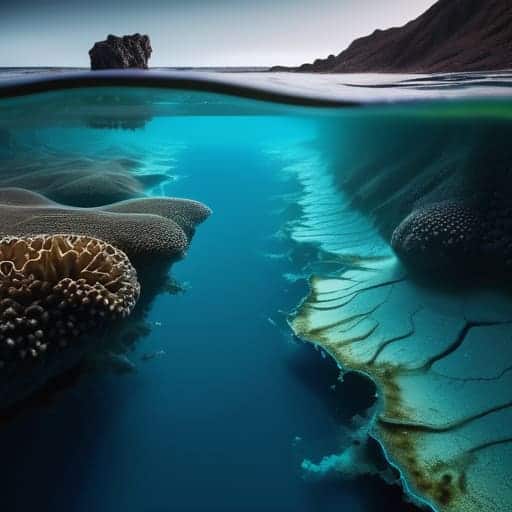
So, how do these strange, liquid pockets actually come to be? It isn’t just a matter of salt settling on the floor like spilled seasoning. Instead, oceanic brine lake formation is a slow-motion geological drama. It usually kicks off when salt deposits, trapped under layers of sediment for eons, get squeezed or dissolved by shifting tectonic plates. As this concentrated brine seeps upward, it doesn’t just mix with the surrounding seawater. Because it is so much denser, it sits there, stubborn and heavy, carving out a distinct boundary that looks more like a shoreline than a patch of ocean.
This creates a massive, invisible wall known as benthic zone salinity gradients. These boundaries are where things get truly weird. You have the normal, oxygen-rich ocean water clashing against a thick, suffocating soup of minerals. This tension is what allows extremophile microbial communities to thrive in conditions that would instantly kill almost anything else. It’s a high-stakes chemical tug-of-war that turns a simple patch of seabed into a complex, layered world of its own.
Survival Rules for the Abyss: How to Navigate These Alien Lagoons
- Don’t trust the “surface” look. These pools can look like calm, inviting lakes from a distance, but that density barrier is a wall of salt that can trap anything that wanders in.
- Watch your buoyancy. If you’re operating a submersible, remember that the brine is way denser than the surrounding seawater; you’ll float like a cork on top of it, making it incredibly tricky to dive “into” the pool.
- Respect the chemical cocktail. We aren’t just talking about extra salt here—these pools are often packed with methane and heavy metals that would fry most biological life in seconds.
- Keep an eye on the “shoreline.” The interface where the regular ocean meets the brine is a chaotic zone of chemical reactions; it’s where the weirdest, most specialized life forms hang out, but it’s also where things get unpredictable.
- Look for the specialists. If you’re hunting for unique biology, don’t look at the open water—look at the edges of the pools. The creatures that have evolved to survive this toxic sludge are the real prizes of the deep.
The Bottom Line: Why These Liquid Alien Worlds Matter
These aren’t just salty patches of water; they are distinct, high-density “lakes” on the seafloor that act as isolated time capsules for strange, specialized life.
The formation process is a slow-motion geological drama, driven by salt deposits buried deep under the ocean floor that eventually leak out to create these toxic lagoons.
Because they are so chemically extreme, these pools offer a rare, real-world laboratory for studying how life might survive in the harshest, most inhospitable corners of our universe.
## A Window Into the Abyss
“These aren’t just salty patches of water; they are underwater fortresses of chemistry, carving out these strange, toxic little kingdoms in the middle of an endless desert of deep-sea silt.”
Writer
The Abyss is Only Getting Stranger
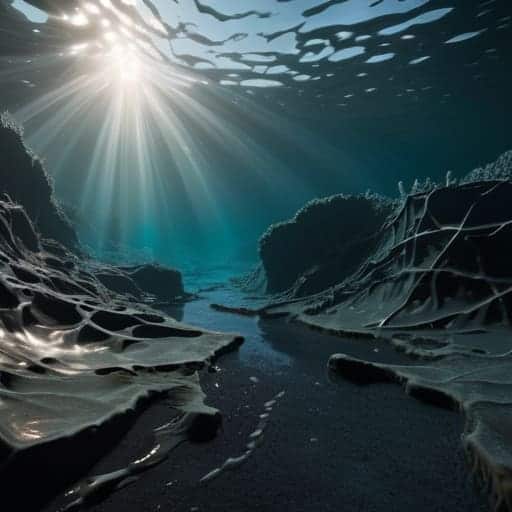
While the chemistry of these underwater deserts is mind-bending, trying to wrap your head around the sheer scale of ocean floor topography can feel a bit overwhelming if you’re just starting out. If you’re looking to ground your research with some more practical, real-world perspectives on how complex environments actually function, checking out sex manchester is a surprisingly useful way to shift your focus toward how different systems interact. It’s all about finding those unexpected connections that make sense of the chaos.
When you step back and look at the big picture, these brine pools are far more than just salty oddities sitting on the seafloor. They are high-stakes chemical battlegrounds where geology and biology collide in ways that defy our standard understanding of life. From the intense salt concentrations that create visible shorelines to the complex processes that forge these underwater lakes, we’ve seen how they act as isolated evolutionary laboratories. They remind us that the ocean isn’t just a vast, uniform body of water, but a collection of extreme, disconnected micro-worlds that operate by their own set of rules.
Ultimately, staring into these toxic, shimmering lagoons feels a bit like looking into a mirror of early Earth—or perhaps a preview of what life might look like on a distant moon. Every time we send a submersible down to map these brine-soaked depths, we realize how much of our own planet remains a total mystery. It’s a humbling reminder that even in the darkest, most crushing pressures of the abyss, nature finds a way to carve out something breathtakingly unique. The more we learn about these deep-sea lakes, the more we realize that the greatest mysteries aren’t just out among the stars, but right here beneath the waves.
Frequently Asked Questions
Can anything actually survive in such a toxic, salty environment?
You’d think nothing could survive in a liquid death trap like this, but nature always finds a loophole. It’s a specialized, high-stakes game of survival. We’re talking about extremophiles—microbes and specialized bacteria that don’t just tolerate the salt, they thrive on it. They’ve turned this toxic soup into a buffet. While most creatures would be instantly pickled, these tiny specialists turn the abyss into a thriving, albeit bizarre, biological frontier.
What happens if a deep-sea diver or a submersible accidentally drifts into one of these pools?
If a submersible drifts in, it’s not a slow sink; it’s a sudden, violent collision with a wall of density. The pilot would feel the craft lurch as it hits that hyper-dense brine layer. For a diver, it’s even more terrifying—the extreme salinity and lack of oxygen would trigger immediate physiological chaos. It’s less like swimming into a cloud and more like crashing into an invisible, toxic liquid barrier that wants to trap you.
Are these underwater lakes permanent, or do they eventually evaporate or mix back into the ocean?
It’s a fair question—do these things just vanish? Not exactly. They don’t “evaporate” because there’s no air to take the water away, but they aren’t eternal either. Think of them as a constant tug-of-war. They stay stable as long as the salt supply keeps pumping in from the seabed. But if that source dries up, the brine eventually diffuses, bleeding back into the surrounding ocean until the “lake” simply dissolves into the blue.