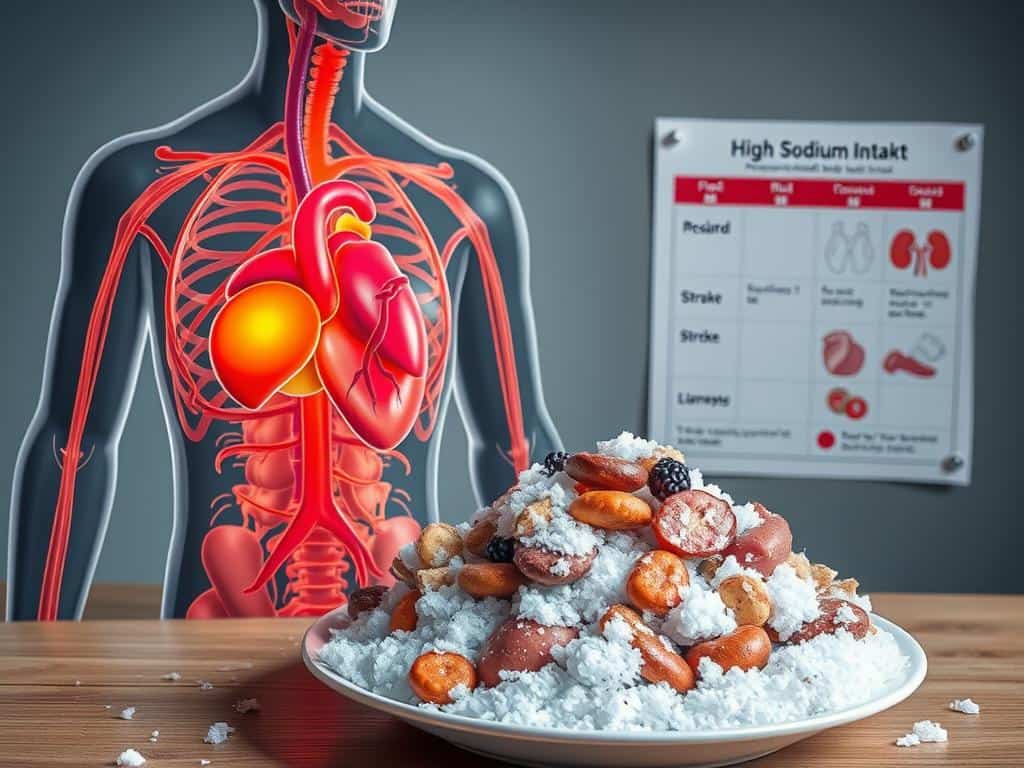
Did you know the average American eats about 3,400 milligrams of sodium each day? That’s way more than the advised limit of 2,300 milligrams. Eating too much salt raises blood pressure and boosts the risk of serious health problems.
In this article, we’ll dive into salt’s important role in our diets and the dangers of too much sodium. By learning how much is too much, we aim to help you manage your intake for a healthier life.
Key Takeaways
- The average American exceeds the daily sodium recommendation.
- High salt intake is linked to increased blood pressure.
- Understanding salt’s role is crucial for managing health risks.
- Reducing sodium can lead to significant health improvements.
- Knowledge of salt’s effects can motivate dietary changes.
Understanding Salt and Sodium: The Basics
Salt is a key part of our meals and our health. It’s made mostly from sodium chloride. This makes salt important for flavoring and for how our bodies work daily.
What Is Salt Made Of?
Salt is a mix of sodium and chloride. About 40% of it is sodium. Knowing this helps me choose my food wisely. It shows how sodium affects our health and keeps our body’s fluid balance.
The Role of Sodium in the Body
Sodium is vital for many body functions. It keeps fluids balanced and helps muscles work. Sodium function also plays a part in nerve signals and muscle movements. This makes it key for staying active.
It works with potassium to keep electrolytes in check. But, too much salt can cause health issues. So, I watch how much I eat.
Short-term and Long-term Effects of High Salt Intake
Eating too much salt is bad for your health right away and over time. I’ve seen how too much salt can cause problems soon after eating and have major effects later. These can seriously affect how healthy we feel overall.
Short-term Consequences of Excess Salt Consumption
After eating a lot of salt, I often feel bloating. This is because my body holds onto water to handle the extra sodium. I also feel my blood pressure go up. This happens because the extra salt makes my body hold more water, which raises my blood pressure for a bit.
Then, I get very thirsty and drink more water. Drinking more means I use the bathroom more too. If this happens a lot, it can lead to too much sodium in my body, known as hypernatremia.
Long-term Health Risks Associated with High Salt Intake
Eating too much salt for a long time is very risky. It’s well known that lots of sodium can cause hypertension, or high blood pressure. Studies show that cutting down on salt can make blood pressure go back to normal. There’s also a scary link between lots of salt and stomach cancer.
Too much sodium can hurt your stomach and cause ulcers. Over time, this can make you more likely to get cancer in your stomach.

Conclusion
Managing salt intake is very important for good health. Sodium is needed for our bodies, but too much is harmful. It can cause health issues, both now and in the future. So, it’s important to watch how much salt I eat for my well-being.
I can stay healthy by following the sodium guidelines from health experts. They say to have 1,500 to 2,300 mg of salt daily. Adding more water and foods high in potassium like bananas and sweet potatoes helps. Also, choosing fresh foods over processed ones improves my diet without losing flavor.
Being careful with how much salt I use is key. By using natural foods and knowing how much sodium is okay, I can help my health. Making smart choices now helps me stay healthy later.