Did you know nearly 70% of Americans now look for foods with extra health benefits? This trend shows a big interest in functional foods. These are foods that do more than fill you up. They also boost your health. As a health advocate, I’m intrigued by functional foods. They can improve your immune system and gut health, prevent missing nutrients, and even cut down the risk of diseases.
Functional foods became popular after starting in Japan in the 1980s. They were meant to better public health through special foods called nutraceuticals. These foods pack a punch with nutrients. They include fruits, veggies, nuts, and grains, plus foods fortified with extra vitamins and minerals. For instance, oats have beta-glucan fiber. This helps reduce inflammation and gives your immune system a boost. Knowing about functional foods is key for anyone who wants to take charge of their health.
Key Takeaways
- Functional foods provide health benefits beyond basic nutrition.
- These foods can help prevent nutrient deficiencies.
- Many functional foods are recognized for boosting gut health.
- Incorporating functional foods may strengthen your immunity.
- Functional foods can reduce the risk of various diseases.
- The concept originated in Japan during the 1980s.
Understanding Functional Foods
Functional foods fascinate me because they can boost our health beyond just nutrition. These foods offer extra health perks. The idea comes from realizing that what we eat can help manage health concerns. Studies show that 95% of people think food is more than basic nutrients. So, the FDA has started guidelines for health claims on functional foods to keep the public informed.
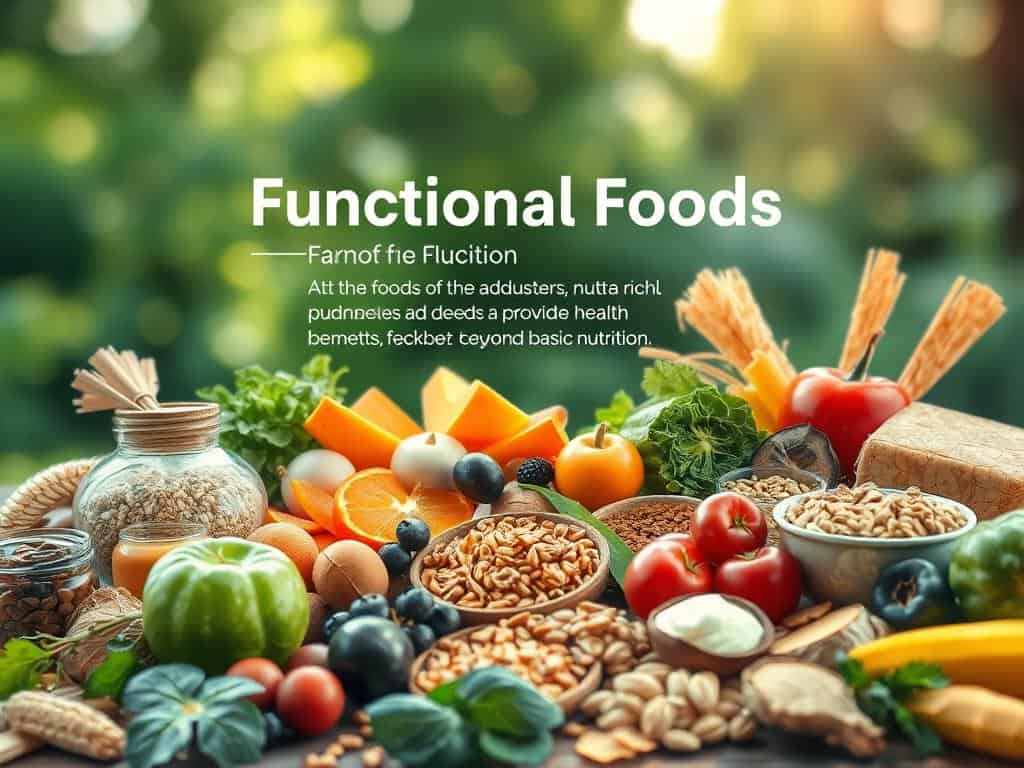
Definition and Origins of Functional Foods
Functional foods are known for their health benefits. They come from old diets that knew some foods helped well-being. Science now backs up these benefits, showing why they’re good in our meals.
Conventional vs. Modified Functional Foods
It’s important to know the difference between conventional and modified functional foods. Conventional ones are natural, like berries and nuts, full of good nutrients. Modified foods are boosted for health, like fortified juices or cereals. Both types help fill any gaps in our nutrient intake.
Benefits of Functional Foods
I am always amazed by the health perks of functional foods. They play a huge part in preventing nutrient shortages. Many offer vital vitamins and minerals, improving our diet. For instance, enriched cereals and dairy boost our nutrient intake. This is a plus for people of every age.
Preventing Nutrient Deficiencies
Adding functional foods to my diet helps me get all the nutrients I need. Foods packed with vitamin D and iron support my health every day. Whole foods and fortified products keep nutrient deficiencies at bay.
Boosting Immunity and Gut Health
Functional foods are great for the immune system and gut health. I love eating probiotic-rich foods like yogurt and kefir. They help with digestion and nutrient absorption. Plus, antioxidants in these foods keep me from getting sick.
Reducing Disease Risk
Eating functional foods also lowers my disease risk. Foods rich in omega-3 acids, like salmon and walnuts, reduce inflammation and help the heart. Fruits and veggies filled with antioxidants fight chronic illnesses. I’m dedicated to eating these for my health.
Conclusion
Functional foods are incredibly important. They offer huge health benefits beyond just basic nutrition. They help prevent nutrient deficiencies, boost immunity, and lower disease risk.
This makes them a key part of a balanced diet. As we learn more about both traditional and modified functional foods, our health can greatly benefit.
More people now understand how vital functional foods and wellness are. They see that food can indeed be medicine. This makes me rethink my nutrition choices.
By adding functional foods to my daily diet, I can better support my health.
I urge everyone to look into functional foods more. Doing this, we can build a better relationship with what we eat and improve our health.
Choosing these foods might be the way to understand nutrition complexity. It could lead to lasting benefits for our health.