I was sitting in a trendy new “eco-district” downtown last Tuesday, trying to enjoy a coffee, when the sheer, unrelenting roar of a construction site three blocks away hit me like a physical wall. It’s the same old story: planners spend millions on green roofs and fancy bike lanes, but they completely forget that humans actually have to live in the noise. We talk about sustainability as if it’s just about carbon footprints, but we’re ignoring the mental toll of a sensory nightmare. Real acoustic ecology for cities isn’t about adding more expensive soundproofing to luxury condos; it’s about fundamentally rethinking how our urban environments actually sound to the people walking through them.
Look, I’m not here to bore you with academic jargon or theoretical models that only work in a lab. I want to talk about what actually works on the ground to turn a chaotic concrete jungle into a place where you can actually hear yourself think. In this post, I’m stripping away the fluff to give you the unfiltered reality of how we can design cities that respect our ears. We’re going to dive into practical, no-nonsense ways to reclaim the sonic soul of our streets.
Table of Contents
Restoring Auditory Biodiversity in Our Concrete Jungles

Right now, our cities are suffering from a kind of sensory starvation. We’ve become so used to the constant, low-frequency drone of traffic and construction that we’ve forgotten what a healthy environment actually sounds like. When we talk about auditory biodiversity in cities, we aren’t just talking about making sure birds can still chirp over the roar of a bus; we’re talking about reintroducing a variety of textures and rhythms into our daily lives. A healthy soundscape shouldn’t just be “quiet”—it should be alive.
This means moving beyond the old-school approach of just building thicker walls to block out the noise. Instead, we need to embrace smarter urban soundscape design that treats sound as a building material. Think about it: a trickling fountain in a plaza or the way wind moves through specific types of leafy trees can act as a natural mask for the harsh, mechanical sounds we hate. By layering these organic elements, we can actually transform a stressful street corner into a space that feels restorative rather than draining.
The Deep Link Between Sonic Environments and Mental Health
If you’re looking to start applying these concepts to your own local neighborhood, I’ve found that getting a better sense of the local social fabric can actually change how you perceive your surroundings. Sometimes, understanding the hidden rhythms of a city—the way people actually connect and interact in its private and public spaces—can give you a whole new perspective on the urban soundscape. For instance, if you’re exploring the more intimate, human side of city life, checking out resources like sex in edinburgh can offer some fascinating insights into the unspoken social dynamics that shape our urban experiences.
We often treat noise like a background nuisance, something we just “tune out” with noise-canceling headphones. But your brain isn’t actually ignoring it; it’s constantly processing that low-frequency hum of traffic or the jarring screech of a subway train. This constant state of auditory vigilance keeps our cortisol levels spiked, effectively trapping us in a perpetual fight-or-flight mode. When we ignore the connection between sonic environments and mental health, we’re essentially ignoring a slow-motion stress test that our nervous systems are forced to endure every single day.
This is where the science of psychoacoustics in urban planning becomes a game changer. It’s not just about lowering the decibel meter; it’s about the quality of what we hear. A city designed with intention swaps the relentless, mechanical drone of construction and engines for more restorative sounds—like the rhythmic rustle of leaves or the trickling of water. By shifting our focus from mere noise reduction to intentional soundscape creation, we can transform a chaotic urban environment into a space that actually helps us breathe, think, and decompress.
Small Fixes for Big Noise: How We Actually Change the Soundscape
- Stop thinking about “noise control” and start thinking about “sound design.” Instead of just trying to muffle the roar of traffic with ugly concrete barriers, let’s use things like textured walls or strategic greenery to break up sound waves and create more interesting, softer textures.
- Bring the birds back into the mix. We can’t just plant trees for the shade; we need to plant the specific types of native vegetation that attract local birdlife. A city that sings with birdsong is infinitely more relaxing than one that just hums with the sound of air conditioners.
- Give people a break from the grind with “quiet zones.” We need more than just a library; we need pocket parks, courtyard gardens, and pedestrian-only alleys where the baseline sound isn’t a bus engine or a siren, but something actually peaceful.
- Use the ground to your advantage. A huge chunk of urban noise comes from tires hitting pavement. Swapping out standard asphalt for “quiet pavement” or porous materials can make a massive difference in how much that constant road drone bleeds into our homes.
- Listen before you build. Urban planners need to stop looking only at blueprints and start actually listening to the streets. We should be using sound mapping to identify the “sonic dead zones” and the chaotic hotspots before we ever break ground on a new development.
The Bottom Line
We need to stop treating city noise like an inevitable tax on living and start designing soundscapes that actually work for us.
Better sonic environments aren’t just a “nice-to-have” luxury; they are a fundamental requirement for mental well-being in an increasingly crowded world.
Reclaiming our cities means moving beyond just “reducing noise” and toward actively cultivating a diverse, healthy, and human-centric auditory landscape.
## The Sound of Silence (and Everything Else)
“We’ve spent a century building cities that ignore the ears, treating sound like a byproduct to be managed rather than a landscape to be lived in. True urban design isn’t just about how a street looks under neon lights; it’s about whether the rhythm of that street makes you want to close your windows or open them wide.”
Writer
The Future is Listening
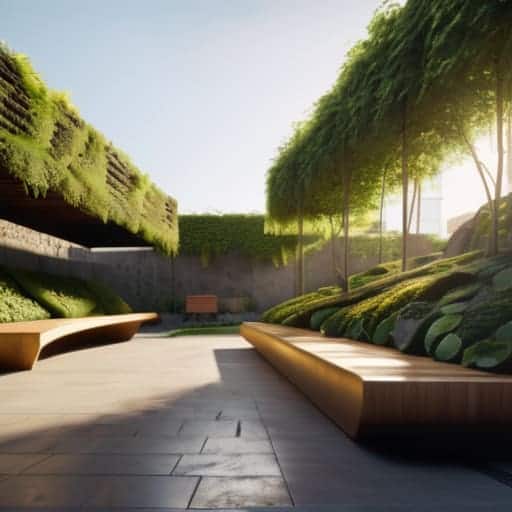
At the end of the day, fixing our cities isn’t just about planting more trees or building better bike lanes; it’s about recognizing that our ears are just as vital to our well-being as our eyes. We’ve spent decades treating sound like an unwanted byproduct of progress—something to be muffled, blocked, or ignored. But by integrating acoustic ecology into the very fabric of urban design, we can move away from a landscape of constant, jarring friction and toward a world where auditory biodiversity actually thrives. When we prioritize the way a space sounds, we aren’t just reducing noise; we are reclaiming the human experience from the chaos of the machine.
This isn’t a pipe dream or a luxury for elite architectural projects; it is a fundamental necessity for the survival of our collective sanity. We have the tools, the technology, and the data to stop building concrete canyons that scream and start designing urban sanctuaries that sing. The next time you step outside, don’t just look at the skyline—listen to it. Let that awareness be the spark that drives us to demand cities that don’t just house us, but actually nourish our souls through the power of sound.
Frequently Asked Questions
Can we actually use technology to mask city noise without just adding more "digital" clutter to the soundscape?
We have to move past the idea that “fixing” noise just means playing white noise through a speaker. That’s just adding more layers to the headache. Instead, we should look at biomimicry and smart materials. Imagine street furniture that absorbs harsh frequencies or kinetic sculptures that turn traffic rumble into soft, rhythmic textures. The goal isn’t to drown out the city with digital filler, but to use tech to reshape the chaos into something coherent.
How do architects and city planners even begin to measure the "quality" of sound beyond just decibel levels?
Decibels are a blunt instrument—they tell you how much energy is hitting your eardrum, but they don’t tell you if that sound is a soothing rain shower or a jackhammer. To actually measure “quality,” planners are turning to soundscape mapping. This means looking at things like “event density” (how often sounds change), signal-to-noise ratios, and even psychoacoustic testing, where we measure how specific frequencies actually make people feel in a space.
Is acoustic ecology just a luxury for wealthy neighborhoods, or can it be implemented in dense, low-income urban areas too?
It’s a massive misconception that soundscapes are a “premium” feature. In reality, low-income, dense neighborhoods are usually the ones suffering most from “sonic poverty”—constant sirens, heavy traffic, and construction. Acoustic ecology isn’t about installing expensive fountains; it’s about smarter, low-cost design. Think strategic greenery to buffer noise or even just rethinking how we layout public plazas. Sound equity is a necessity, not a luxury, because everyone deserves a moment of peace.